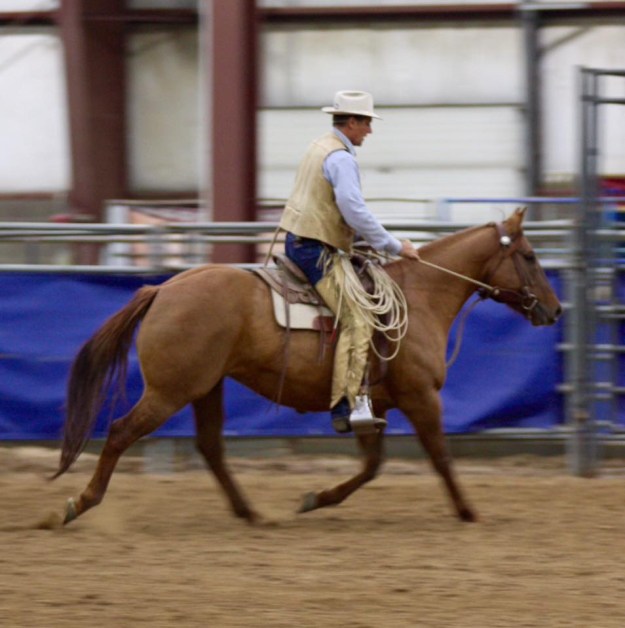
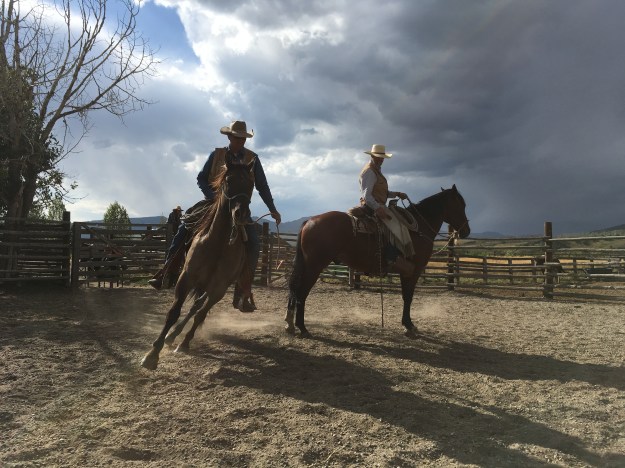
Low Stress Livestock Handling Demo

9C078A3B-BC4E-417D-AED0-04E038FB96F7

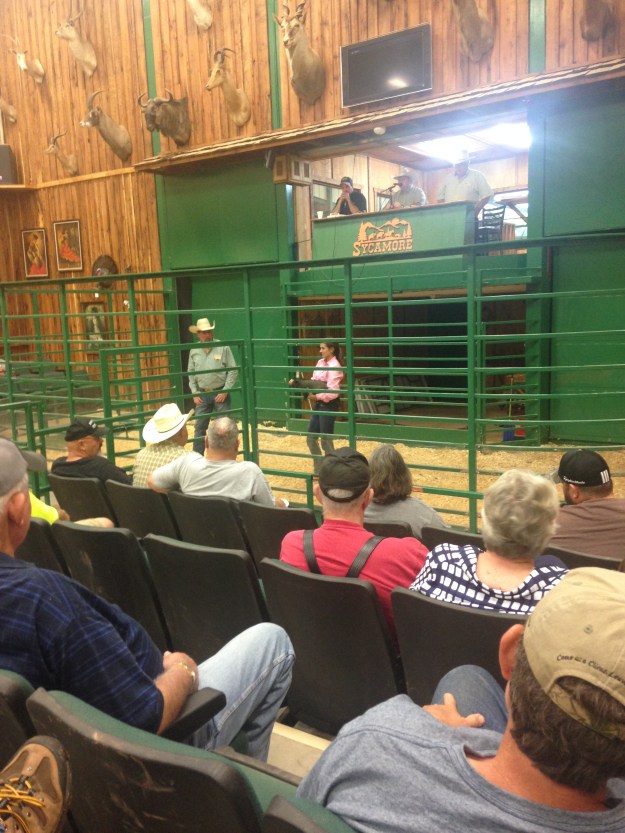
Imagine we are somewhere in livestock country North America. Outside the country hall are lots of pick-up trucks with trailer hitches, 4×4 SUVs, and one Volkswagen bus. Inside we have lots of different hat styles. We have cowboy hats, (lots of different shapes and styles)caps with company logos, a few stocking caps (tukue if we are in Canada) and some long hair hippy types with no hat(most likely organic producers[a little humor]).
4ECD4C88-AF0F-4615-8CB6-42F25305C3B7

There is a presenter up front promoting and teaching “low stress livestock handling”. He or she may be showing video and talking about how to be more humane and low stress in the handling of livestock. Lots of do’s and don’ts and instruction on the “right” way to do it.

After the talk, then the whole crew is fed by someone that gets a little time to promote a product. (The folks in the VW van are a little light headed from the steaks served by pharmaceutical Company because of the hormones and antibiotics)[Im still trying at the humor thing]

Then we go on to the live demo. This is the place that really tells and shows the truth. People enjoy seeing real time, live work. It’s easy to set it up where the cattle will work good by running them through before and not using cattle that would challenge you, but you still need to work right to make it a good demonstration.

C3F4CF93-E2C0-464F-8F56-2563D0DBAFC5

If the cattle are not pre trained and not the best to work, that’s real world and these situations need to be learned from as well.

After the question and answer session is over everyone heads home.

I can just imagine some of the conversations on the way home. Some positive, some negative, some confused, some excited to try new things,and some glad they have been doing things the way they should.

We all have different ideas and methods of working livestock. Some are habits,
Some are learned, and some we have copied the way others work. Some want to learn new ideas to be better, some wanted the free meal and the visit with neighbors, and some had to go because that’s what the boss said.

It is very difficult to present ideas that will help everyone’s skill level. I’m just glad people are out presenting. It gets people thinking, searching and trying things. Livestock handling is so hard to teach and learn as the situation is always changing. You have to think, act, react, change, then think, react, change and act again. If you give up if things don’t work perfect, you won’t get very far.

This is the challenge for “cowboys” (I hope I can include myself in this group)we can always get the job done. Our skill is all about getting it done with whatever it takes. If you can’t then you may not be a “good” cowboy. The cowboys I see really hook onto good stockmanship(a stockman) are the ones that really believe in doing things with the right amount of pressure, and that means doing things with as little pressure as is necessary, but as much as is necessary at the time it’s necessary.

The challenge for the non cowboys is many times they can’t or don’t want to physically create enough pressure to “make a cow go through pressure”. The cow learns this very quickly and pretty soon the cows pretty much refuse the pressure presented to them.

So, let’s look at some ideas that I think will help understand pressure and how much to use.

Electric or power fence can be very effective. For it to be effective animals need to be trained to it. Set up a situation to where the shock (pressure)comes from the correct spot (balance point) to teach the animal to move away from the pressure, and learn to not push through the fence(pressure). If the pressure(shock) is not enough the animal will learn to “push” through it and it will be ineffective and teach an animal to walk right through pressure. Another way of saying it is it has to be enough pressure to change the mind. You must do the same to be effective.

If the fence is “hot” the animal knows without any doubt that it is pressure it doesn’t mess with. Livestock will graze right up to within inches of a fence, so they are not afraid of it, just aware of it. If you shake the wire or it pops they will move away from it as they are aware of the pressure it can create.

The pressure of the fence creates stress the first time,(sometimes twice, as most young cattle have to go back and touch it again just to make sure)but once they are trained they only touch it by mistake. You can have a stud or bull on one side of a good power fence, and a mare or cow in heat on the other side and the power fence will keep them separate and safe. You could do it with another fence, but it would be sort of like the wall they want to build between Mexico and US.(that will be next weeks song).

Proper pressure is effective if is used properly. Enough is way more effective and long lasting in the animals memories than not enough. To much for to long or at the wrong time creates long lasting fear.

Many people have been injured or worse from working with bulls. I would bet a large percentage is not from a bull trying to hurt the person, but a bull running over the person or hitting a gate fleeing from another bull.


A bunch of bulls can be moving along just fine and you wouldn’t know that anything was going on, and in a flash everything’s changed. The bull that is leaving in a hurry understands the pressure the other bull can create (from previous experiences)and is leaving the scene no matter what is in the way, even an electric fence.


If you’ve moved many pairs around with a bull with them, you’ve probably experienced the bull stopping the movement and not letting them go through the gate. One bull can stop the whole bunch, and make it very difficult to pressure enough to get things turned around. The cows understand his pressure, and he is very good at using it effectively. It seems like three or four people yelling, pushing and lots of other things should be able to overcome the pressure of just one bull, but it can be very difficult if the cows don’t move away from your pressure properly. The single bull is able to put more pressure back on the cows than you can push forward.

He has the same effect going through the gate as the chute has on getting cattle to go into the lead up alley to the chute. When something is putting pressure on from the front, it creates the same situation as trying to push a rope, or backing up a old time hay wagon. It doesn’t go where it’s supposed to, and if you push harder and faster it makes it worse.

If you recall the example in the last loop I threw at you, it explained about getting young horses to go through pressure with proper pressure coming back so they can learn to go through pressure and get relief of the pressure on the other side. If you have is kind of movement with your cows, the bull will not be near as apt to slow things down because the cows have learned to go through pressure in front from your pressure beside them (not behind). Same goes up the alley or into lead up.

Hopefully it’s starting to come together. If you had taught your livestock to take pressure by using the correct kind of pressure and release of pressure, either by the animal being driven or the person doing the driving. This is what we should be doing when we are moving cattle. Teaching them that you will and can put as much pressure on as needed (fence charger), and having them not move in a panic, but understanding to move if you ask or tell (bulls).

They will never learn this if you are drawing them or calling them with feed. I’m not saying you shouldn’t “bait livestock”, but if you are out of balance on the draw and the drive you will have a hard time driving them.

Bottom line is low stress handling is not just low pressure. This can and does create more stress and lower production. That’s why I like to call it “effective stockmanship”. Your pressure has to be effective in all ways to really work livestock in a manner that is low in stress to the animals and the humans.

Work your livestock and learn what you need to do.

Each group of people that attended should change in different ways. The cowboys might have to use less pressure than they have been before.
The retired couple that just bought fifty head of registered stock might have to use more pressure than they thought.

I hope I haven’t made the folks in the van mad. They have just as much right to be in this livestock business as any. Truth be known I would have probably sat with them at the meal. I would have learned something new to think about.

Many small operations or places that are very into being “at one” with the animals have the very best intentions, but if you watch the real animal world, it’s not very touchy feely. When a hour old calf try’s to suck the wrong cow and she kicks him real hard or butts him into the fence with her head, that’s not very touchy feely. It would be animal cruelty if the human did it, but for the cow, it’s just what she does. She doesn’t understand touchy-feely, giving it or taking it. She just does what she lives.

You can change that by the way you use pressure. Think about it and figure it out. That’s how it works.


Ned Ledoux-The Hawk

I grew up listening to and singing Chris Ledoux’s songs.  My kids grew up listening and singing Chris Ledoux songs.  I would have to say of all the cowboys I look up to he probably is the number one.  He had gone to college in Casper several years before I did and they still talked about what a great cowboy and person he was.  I was inspired by how much try he had as a singer and bareback rider.

I went to a concert of his in Nebraska and they had a bucking machine come up on stage with him spurring the heck out of it and singing “Bareback Jack”.  I’m not much of a concert goer, but I sure enjoyed that one.  I remember he introduced his son Ned as one of the drummers in the band.

Well that was a long time ago.  I listen to Pandora and one of my favorite stations is Ian Tyson.  I heard a favorite Chris Ledoux song but it sounded different.  I looked at it and it was Ned Ledoux.  He is so good.

So now it is working the other way.  I have become a big admirer of Ned Ledoux so that family has been entertaining my family for over forty years.

I hope you enjoy it and will listen to some of both Father and Sons songs.


Forward Movement from Moose Jaw

I have been trying to figure out the best way to try to explain my thoughts on creating good movement in an alley, crowding area, and lead up alley to a chute. I started out comparing it to starting a colt, and that’s a pretty good way to compare it if you have started some colts. Not everyone understands what it’s like to ride a young horse and getting him to move out, so we will take another approach.

F928AF21-6266-4C64-8273-4F776B7B877E

My horse Jaxsen with forward movement.  He’s about to run off!

There has been some real good writing on this subject by others, and if you do a little research you can find it. I will go about trying to get my point across not by copying or repeating others, but try to present it in my own thoughts and methods.

One of the things that’s written and spoken about is flight zone. That’s a good place to start.

If we are trying to keep the stress level low, flight would be considered a negative. Flight is caused from fear, and in my opinion fear is much worse on an animal than pain. We need to take it farther and figure out there are different kinds of fear. Let’s call it acute fear (flight)and dull fear (aggravation)

I have watched all my life how much animals can take. Castrate a 500 pound bull calf and before long he has his head down eating. Now if you rubber band that calf to castrate him, after the fear of having the rubber band put on, he has the aggravation  of the dull constant pain and has to take it and get used to it. If an animal can only think of one thing at a time he thinks about that hurt in his belly and how it effects everything.

The calf that was knife cut may be very flighty and leave the castrations area in a hurry. When you approach him, at first he will react. The next day he will be stiff and sore and may act more like the banded calf(depending on the moon as Grandma Betty would say)and you must be careful not to cause him to injure his wound, but if you move him around a little he will get to feeling better.

The rubber banded calf will be much less responsive as he has had the dull pain and is not able to respond normally because of the rubber band. He may not be able to walk right and doesn’t want to or can’t move fast. A pen of rubber banded calves (if they were not crazy wild)will get hard to move because they have to overcome their fear of you because they can’t physically move as well. They would rather take your pressure than the discomfort of the rubber band on the testicles is causing. If you are not careful and really pressure properly you will have trouble moving them from then on.

If we go back to the colt scenario, the job of the colt starter is to get the horse to responding to the amount of pressure presented, but not exiting the chute at top speed every time. We get the horse to understand to not be afraid of the pressure, but to move at a pace that matches the pressure. If the colt has a lot of fear it will over respond and make it very difficult to get him where you want him and may be unsafe. The more “flight” the horse has the less it take him to go.

240E9EE4-8F3A-44B4-A5D5-D7EE4638B2B1

With those thoughts in mind, let’s look at what happens in the life of a cow. Like the calves I explained about in Canada, and filling the tub, storing them in the tub, and bring them up as needed(exactly what we all say not to do). These calves don’t have fear of what is about to happen to them, as they have never had it happen before. Most go up easily, get processed and have the first fear reaction when the squeeze and head catch is applied, and then have lots of things that create a fear reaction happen in less than a minute. They leave pretty fast and are a little stirred up.

Now let’s step ahead to the next time they go through. They may be a little harder to get up the alley and the gate closed on the tub or box. They should still be responsive to the human and it’s pretty easy to get them to go even if you are not using the best pressure. The fear of the human is still more than what is up ahead. If they can only think about one main thought at a time, they will respond to the highest stimulus and that is still the human.

This time if you fill the tub or box you will have lots of trouble getting them started up the lead up. The memory and fear that they get as they leave the herd and start up the alley will be more pressure than you can put on in this situation and they will learn to refuse or run through your pressure.

Now let’s do it right, and by the way these are replacement heifers that you will deal with for many years to come. Take the proper number (less is best)for the box or tub and lead up to create flow. Keep the pressure on in a way that keeps them thinking forward, and have enough pressure to keep them from having time to change their mind. “Be quick, but don’t hurry” will help you keep enough on, but not to much.

This will create a mindset to over come pressure coming back on them (the transition to lead up alley puts pressure back, that you must overcome to get them to go forward rather than turn back, this is why a tub with the pivot point at the entrance to lead up alley is most effective, and if you are using a box, you need to be in position to keep the pressure on to send the forward with out turning back.

I used to use Purina feed sacks (sponsor prostitution)to get colts to learn how to to go forward through pressure. I would start out with the sacks about the right distance to create a pressure that the horse needed to be helped through. If they were to close, the horse would refuse and he would learn to overcome your pressure by stopping,or learn to escape the pressure by running through their shoulder sideways or turning back.

Having to keep track of things on both sides is what is the pressure. As the colts starts through the pressure is causing to not to want to go forward. As he crosses the “balance point” the pressure changes from pushing back to driving forward. The horse gets to looking for that release, and when the balance point moves forward, it’s time to move the sacks in a little.

31C19A8D-4971-43A6-8F74-BAEC66DA4A6A

I used the same concept at a cattle handling clinic in British Columbia.  We had spectators sit in their chairs and we had teams take the cattle through.  Really a good exercise.

If you had several colts being ridden, the most forward and responsive ones could go first and help draw the others through. With this approach you put a lot of confidence in the horse, and the pressure back became the reward and caused the horse to want to go forward to the release of pressure. In no time the sacks could be together and the horse would go right over them.

This created a desire to go forward through pressure and it sets the foundation to cross water, roads, ride strait and all kinds of positive things. If you don’t get a young horse going forward through pressure, you might have to deal with it for the rest of the time he is used.

E593C2B3-51DF-4228-80B6-E8B90F00FD4F

Son Rial jumping my horse “After Midnight “.  When a horse has the desire to go through pressure it is easy to get them to do just about anything.

The trouble with it is once he gets to refusing it takes more and more pressure. The reason it takes more pressure, is that he learns to ignore (override the fear and overcome the pressure). Next thing you know you have to add more pressure, and if you have the skill, you can overcome it and change his mind. If you don’t have the skill pretty soon the horse learns to escape or ignore your pressure, and your done. (This is what happens in the situation with the cows in Moose Jaw)

Now if we were to take the same approach with the heifers the first two times up the chute, and taught them to go through pressure and get the reward of freedom from pressure by going through the chute pressure without being caught and processed, they would learn to want to go through pressure just like the colt.

The two spots that are like the sacks are the transition from tub or box to lead up alley and the chute itself. This is one reason a Bud Box is effective. The person controlling the pressure is like the sacks and can change to the needs of the animal, if it’s worked effectively. The tub with the pivot point at the lead up keeps the head pointed through the pressure, and the relief comes from going forward through.

As the calf comes to the chute, it is nice to have someone slowing them down or speeding them up so they must think their way to freedom of pressure. If they go to fast they can scare themselves and it can be worse than catching them.

Once you get this desire to go through pressure, you really have to maintain it. This is why spurs are so popular on horses, and driving aids like flags, sort sticks and rattle paddles are so popular. The make it easier to create more pressure to get an animal going after it has changed its mind. If it had not changed its mind you would not need the aid. That’s why I don’t ride with spurs, and don’t use driving aids with livestock most of the time. If you don’t have them you must be ahead of or at least with the mind of the animal you are working.

This is so important to understand and so hard to figure out. The number one thing to figure out is to not be late with pressure. It doesn’t matter how correct the pressure you put on when working animals, if your late with it it’s wrong!

Hopefully this has got some images in your mind of creating good flow with animals that don’t have bad habits. This was real hard to figure out how to explain my thoughts.

The thing we need to go back to is fear and pain. If the fear or aggravation that you are trying to take the animal too or through is more than the animal can take, they will escape from it, or at least try too(this is how cattle end up upside down in a chute), or simply bear the pain if they don’t have a big flight zone.

We need to work our cattle through a chute much more now than in the past. We will create a resistance with our animals if we don’t really try to figure out if what we are doing is effective. If every time you put your cattle through the chute the get better, life’s good. If every time you put your cattle through the chute, they get worse, well pretty soon you won’t even be able to get them in the corral.

We will continue on the with subject after I let my head clear a little. I might have to spread the sacks out or go through the chute with the gate open a time or two.