Some more videos and picture from my work in Mexico
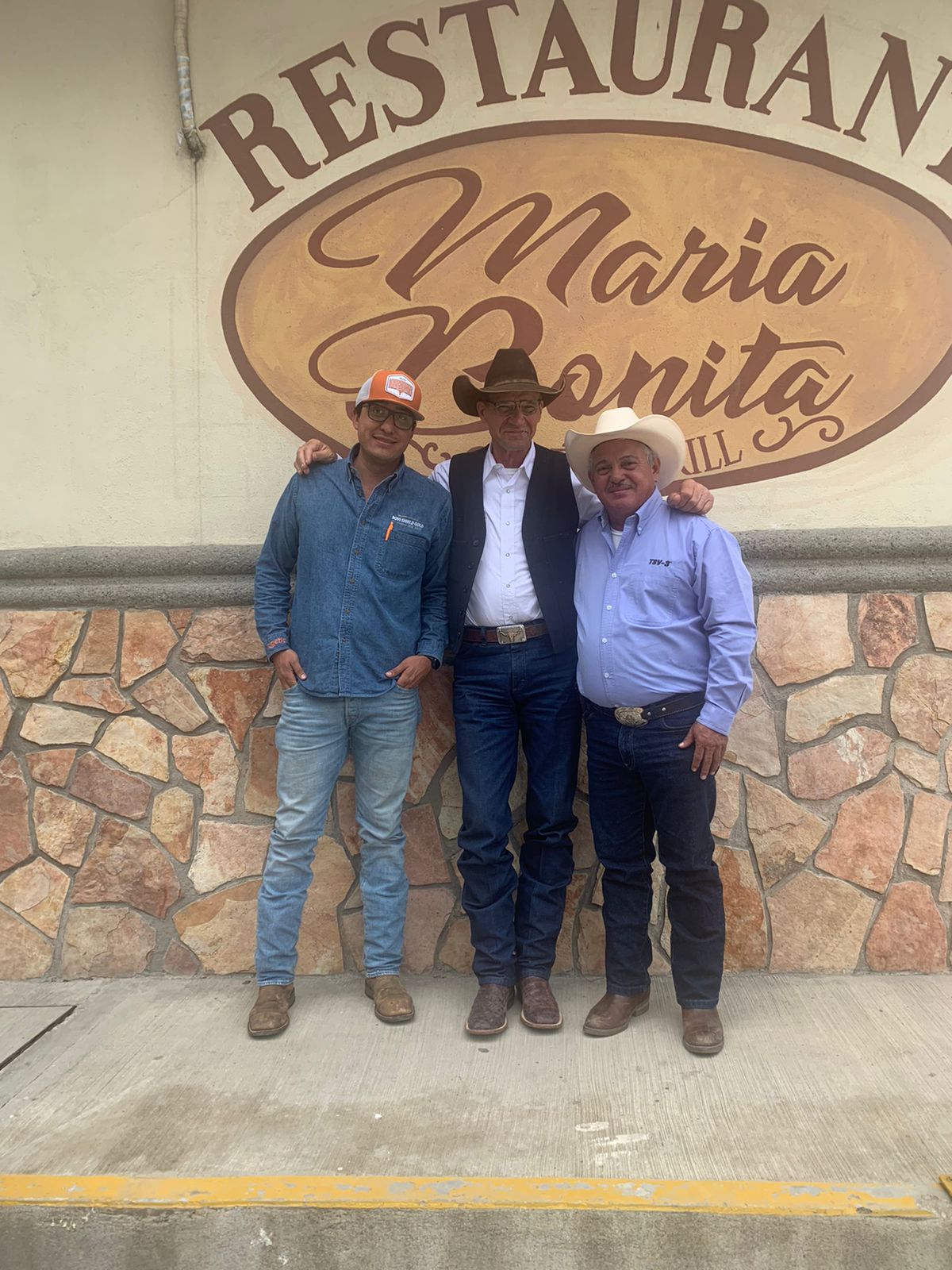
My hosts and now friends from Zoetis Mex
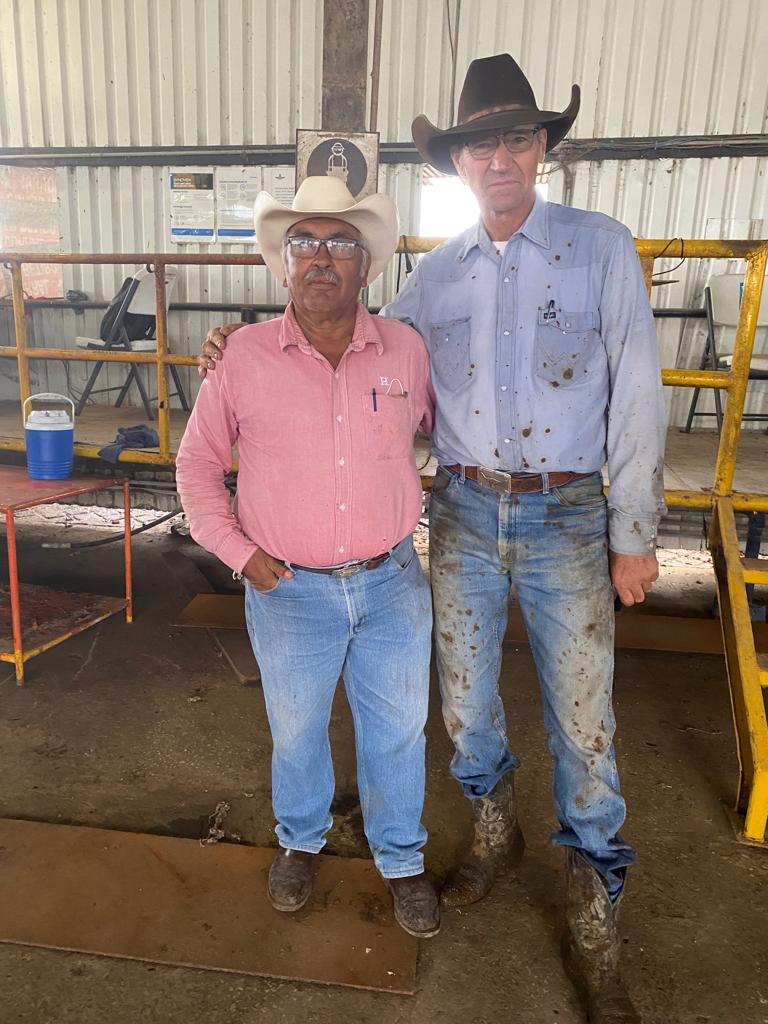
My adopted Father in Mexico! I was working, he was watching and liking what we were doing.
Some more videos and picture from my work in Mexico
My hosts and now friends from Zoetis Mex
My adopted Father in Mexico! I was working, he was watching and liking what we were doing.
The workers I encountered in Mexico were very attentive and and open to ideas. The managers were all there watching and encouraging the crew to ask questions and observe and participate. The biggest challenge was my not knowing how to speak Spanish.
Zoetis hired an interpreter that was wired to my microphone and then he immediately repeated it in Spanish. It worked very well to communicate, even at a distance.
This next set of videos was from a pen of cattle that had just come in from the grazing cells where they had been moved daily by horseback. They were not used to people on foot, and we just happened to be at the pen waiting for three guys that were going to pull a pen on the other side of the feed alley.
We watched the three guys that were checking the pen and I asked if I could go in and share some thoughts. They really didn’t know what was going on but really tried to go along with what I was doing.
The Zebu breed of cattle are so fun to work and really respond to pressure with feel.
We talked about settling the pen, getting them to respond to pressure without panic movement, and pulling an animal having them decide to walk out rather than being forced out.
I enjoy working with the cattle and the people of old Mexico!
Thanks to Esteban with Zoetis for the nice videos!
This facility is for dipping cattle for ticks. When we got there they were putting cattle in (to many) and pushing from the back. It wasn’t working very well. They would get a couple in the run to the dip tank and then get them to go in and then get a couple more. They really don’t like to go into the dip tank, especially if there is no flow.
We changed it up a little and put five or six at a time in. It’s hard to get enough movement for the cattle to go to back of box and creat enough movement to get them to create the lead/follow that makes the box so effective.
The reason I like this what I call a true Bud Box (except for the solid gate on the back side) is that it is the correct length for the lead up to the vat, and the 90 degree angle of the gate and entrance to the lead up. This allows the animals to have more room to get strait and come through the pressure. The angle gate creates to much pressure on the following animal so you must get farther back to keep the flow going and then they jam at the entrance to the lead up. This is why the double alley is needed. It works but not near as good as the “true” Bud box, and before long the handler is using it like an old style “V” system.
I’m not saying the angle gate and double alley are wrong, they just need to be used differently than the true Bud box.
The Bud box if set up correctly and used correctly will create a better handler and better flow with cattle from the box to the chute.
I will try to get some video of working a double alley with a angle entrance and how I feel if works the best.
 Curt Pate Stockmanship