Monthly Archives: February 2018

Dream Back Beyond The Cramping Lanes


I have mentioned working for Sieben Ranch previously. It was a great place to work, and the foreman, Clark Atkinson was really a great stockman and boss.
It was a big ranch with lots of different country, lots of different employees, and John Baucus was a real good boss that left us alone to do our job.
5B282DEB-F0DB-4279-90B9-6E768E7B9FD540E7DFB2-6BD8-44A8-B431-F040CA422A52

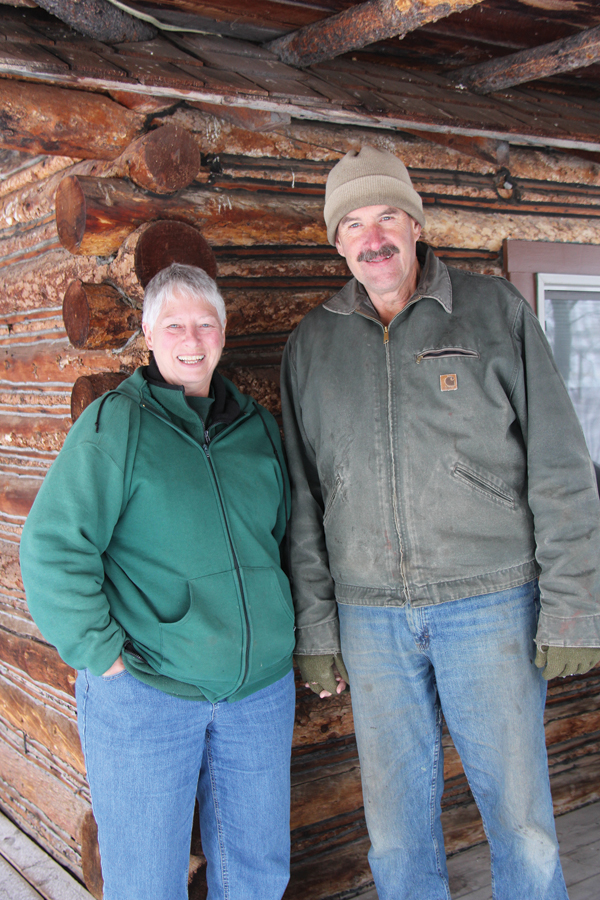
John and Nina Baucus

We lived about 10 miles from headquarters, but I spent quite a bit of time there doing cattle and sometimes sheep work. They had a cook and cookhouse, and the bell rang at 6,noon, and 6. If we were working and got to a good place to stop for dinner, Clark would shut things down and we would head to the bunk house to wash up and wait for the bell. Sometimes it would be an 45 minutes to an hour early. Clark would use this time to discuss some plans he had, or just to share ideas to improve ranch operations. We never had formal meetings, but got lots done in these visit sessions.

There were stacks of Western Horseman magazines in the bunk house. Sometimes we would just pick out one and read (or look at the pictures).
I saw a article about two California fellows loading bulls in a trailer out in the pasture. I later met Joe Wolter and Brian Newbert and still admire the things they do.

B33AF5D2-2383-4A02-B675-7A061D407C31

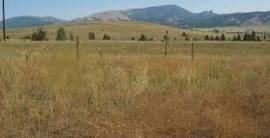
Well, I couldn’t wait to get to loading bulls. We had bulls out on the “Sieben Flats” and they were good size open pastures with some timber and brush but not much, and you could get pretty much anywhere in the pasture with a trailer.
04A6ABCA-0EFB-4F20-96DB-ACFEB9978A9E

The first bull I tried to load, (I can’t remember if he had foot rot or pinkeye, or I just needed him somewhere else) I pulled the trailer up next to the fence, and opened the gate against it and loaded the bull. It took quite a while, and I figured out that I was trying to “make” the bull get in. Later I learned to go about it so the bull “decided” to go in.

The next time I went out, I parked right out in the middle. Then I drove the bull real careful, so as not to get him to trying to get away from me. Once I got him to the trailer, I would get him to the back entrance and if he looked in I would back my horse up a step or two. If he went by the door I would just put a little pressure on take him for a little trip around the pick up and when he got to the back gate and looked in, step back. It didn’t take long and he got in all on his own.

I had really been working on my horsemanship and was really aware of the release of pressure, so it was easy to figure out. I had gotten real good at getting horses to load, and I used the same mindset, I just didn’t have a halter and lead rope, but the principle was the same.

I got really good at loading bulls by myself out in the pasture. One time I loaded one older bull, shut the center gate, and went to loading a younger bull. Every time the young bull would step up to load, the older bull would blow snot and send him away. I worked at it for quite a while, got the old bull to quit running the young bull off, loaded the young bull, then put my horse in and headed to the headquarters. I remember how good I felt about what I had accomplished.  No one around to see, just me and the animals I was working with.

These things took quite a while at first, but I got better and better at it, and pretty soon I could load a bull real easy, because I learned by doing how to put the right pressure on, and how much to take off or let the bull take it off. It became a real time saver, rather than driving them all the way back to the main ranch corrals.
7B04897E-CAC6-4FCF-9125-562AA5EA81C3

One time I was riding up “Little Sheep” checking on some young pairs we had up there. I was about a mile or so from the trailer and I came upon a young bull that had pinkeye in both eyes and couldn’t see a thing. He was real gant and I new he hadn’t drank for a while. There was no way to get the trailer up the draw to him. I rode up to him and made a little noise and he left and would walk right into a tree. I would start him walking and just before he ran into a tree I would say “hey”. If didn’t take that bull long to figure out that he needed to turn when I said “hey”. I got him down to the road and the creek. He got a drink, and believe it or not, I drove that blind bull the couple miles to the ranch, and it got to where I could keep him on the road just by noise.

We purchased 18 young bulls one year. We were riding some young horses, and in one of our bunkhouse meetings, and I suggested we put our trailers in the middle of the bull lot and get some good work for our colts and teach the bulls to load. It took a lot less time than I thought and you couldn’t keep those bulls out of the trailer. They new that was the best place to be when we were in the pen with them. I don’t think I ever got to load any of those bulls as I went out on my own not long after that, but I bet they were always good to load anywhere.

I can’t think of a better opportunity for me to learn than those days at Sieben. I would work by myself a lot and really learned how to be a better horseman, stockman and dog handler. I was as gung ho on learning as you could be and it was the perfect place to learn. Clark as the boss, and John Shelby (great California trained cowboy)and myself roped, doctored and moved cattle as a good team.

All those experiences really thought me to learn and think for myself. The horsemanship, as well as Clark’s strong influence from the sheep world ( he was the camp tender [sheep boss]for years before becoming foreman), and working solo lots of the time, really helped me to figure out many things with stockmanship. If I heard about something hard to do, I did it. It was a great time of learning in my life.

That’s also about the time I got real interested in a better type of saddle. I remember one saddle catalog that had a poem on the front of it, and a picture of some young cowboys. It’s the only “cowboy poetry” I ever learned and I still remember it.

“Dream back beyond the cramping lanes to glory’s that have been,
The camp smoke on the sunset plains, the riders loping in.
Loose reined and Rowelled heel to spare, the wind our only guide,
For youth was in the saddle there, with half the world to ride!”

Well, that was me. Learning and loving the work.

I know the value of being able to load bulls out in the middle of a pasture. Thanks to that article in the Western Horseman, it got me started doing something I might not have ever done. I gained so much confidence being successful at it. Bulls will teach you about proper pressure better than any other class of animal. I feel it probably helped me improve my stockmanship more than anything else. That was all started a long time ago!

For the last few years, I have been promoting the idea to bull producers that are selling bulls that they should get the bulls trailer broke and that would raise the value of the bull. Well finally someone took me up on it. I’ll share the story in the next loop I throw out there.
09262D36-DFAA-4C82-A655-0B5E84CA06ED


Low Stress Livestock Handling Demo

9C078A3B-BC4E-417D-AED0-04E038FB96F7

Imagine we are somewhere in livestock country North America. Outside the country hall are lots of pick-up trucks with trailer hitches, 4×4 SUVs, and one Volkswagen bus. Inside we have lots of different hat styles. We have cowboy hats, (lots of different shapes and styles)caps with company logos, a few stocking caps (tukue if we are in Canada) and some long hair hippy types with no hat(most likely organic producers[a little humor]).

4ECD4C88-AF0F-4615-8CB6-42F25305C3B7

There is a presenter up front promoting and teaching “low stress livestock handling”. He or she may be showing video and talking about how to be more humane and low stress in the handling of livestock. Lots of do’s and don’ts and instruction on the “right” way to do it.

After the talk, then the whole crew is fed by someone that gets a little time to promote a product. (The folks in the VW van are a little light headed from the steaks served by pharmaceutical Company because of the hormones and antibiotics)[Im still trying at the humor thing]

Then we go on to the live demo. This is the place that really tells and shows the truth. People enjoy seeing real time, live work. It’s easy to set it up where the cattle will work good by running them through before and not using cattle that would challenge you, but you still need to work right to make it a good demonstration.

C3F4CF93-E2C0-464F-8F56-2563D0DBAFC5

If the cattle are not pre trained and not the best to work, that’s real world and these situations need to be learned from as well.

After the question and answer session is over everyone heads home.

I can just imagine some of the conversations on the way home. Some positive, some negative, some confused, some excited to try new things,and some glad they have been doing things the way they should.

We all have different ideas and methods of working livestock. Some are habits,
Some are learned, and some we have copied the way others work. Some want to learn new ideas to be better, some wanted the free meal and the visit with neighbors, and some had to go because that’s what the boss said.

It is very difficult to present ideas that will help everyone’s skill level. I’m just glad people are out presenting. It gets people thinking, searching and trying things. Livestock handling is so hard to teach and learn as the situation is always changing. You have to think, act, react, change, then think, react, change and act again. If you give up if things don’t work perfect, you won’t get very far.

This is the challenge for “cowboys” (I hope I can include myself in this group)we can always get the job done. Our skill is all about getting it done with whatever it takes. If you can’t then you may not be a “good” cowboy. The cowboys I see really hook onto good stockmanship(a stockman) are the ones that really believe in doing things with the right amount of pressure, and that means doing things with as little pressure as is necessary, but as much as is necessary at the time it’s necessary.

The challenge for the non cowboys is many times they can’t or don’t want to physically create enough pressure to “make a cow go through pressure”. The cow learns this very quickly and pretty soon the cows pretty much refuse the pressure presented to them.

So, let’s look at some ideas that I think will help understand pressure and how much to use.

Electric or power fence can be very effective. For it to be effective animals need to be trained to it. Set up a situation to where the shock (pressure)comes from the correct spot (balance point) to teach the animal to move away from the pressure, and learn to not push through the fence(pressure). If the pressure(shock) is not enough the animal will learn to “push” through it and it will be ineffective and teach an animal to walk right through pressure. Another way of saying it is it has to be enough pressure to change the mind. You must do the same to be effective.

If the fence is “hot” the animal knows without any doubt that it is pressure it doesn’t mess with. Livestock will graze right up to within inches of a fence, so they are not afraid of it, just aware of it. If you shake the wire or it pops they will move away from it as they are aware of the pressure it can create.

The pressure of the fence creates stress the first time,(sometimes twice, as most young cattle have to go back and touch it again just to make sure)but once they are trained they only touch it by mistake. You can have a stud or bull on one side of a good power fence, and a mare or cow in heat on the other side and the power fence will keep them separate and safe. You could do it with another fence, but it would be sort of like the wall they want to build between Mexico and US.(that will be next weeks song).

Proper pressure is effective if is used properly. Enough is way more effective and long lasting in the animals memories than not enough. To much for to long or at the wrong time creates long lasting fear.

Many people have been injured or worse from working with bulls. I would bet a large percentage is not from a bull trying to hurt the person, but a bull running over the person or hitting a gate fleeing from another bull.


A bunch of bulls can be moving along just fine and you wouldn’t know that anything was going on, and in a flash everything’s changed. The bull that is leaving in a hurry understands the pressure the other bull can create (from previous experiences)and is leaving the scene no matter what is in the way, even an electric fence.


If you’ve moved many pairs around with a bull with them, you’ve probably experienced the bull stopping the movement and not letting them go through the gate. One bull can stop the whole bunch, and make it very difficult to pressure enough to get things turned around. The cows understand his pressure, and he is very good at using it effectively. It seems like three or four people yelling, pushing and lots of other things should be able to overcome the pressure of just one bull, but it can be very difficult if the cows don’t move away from your pressure properly. The single bull is able to put more pressure back on the cows than you can push forward.

He has the same effect going through the gate as the chute has on getting cattle to go into the lead up alley to the chute. When something is putting pressure on from the front, it creates the same situation as trying to push a rope, or backing up a old time hay wagon. It doesn’t go where it’s supposed to, and if you push harder and faster it makes it worse.

If you recall the example in the last loop I threw at you, it explained about getting young horses to go through pressure with proper pressure coming back so they can learn to go through pressure and get relief of the pressure on the other side. If you have is kind of movement with your cows, the bull will not be near as apt to slow things down because the cows have learned to go through pressure in front from your pressure beside them (not behind). Same goes up the alley or into lead up.

Hopefully it’s starting to come together. If you had taught your livestock to take pressure by using the correct kind of pressure and release of pressure, either by the animal being driven or the person doing the driving. This is what we should be doing when we are moving cattle. Teaching them that you will and can put as much pressure on as needed (fence charger), and having them not move in a panic, but understanding to move if you ask or tell (bulls).

They will never learn this if you are drawing them or calling them with feed. I’m not saying you shouldn’t “bait livestock”, but if you are out of balance on the draw and the drive you will have a hard time driving them.

Bottom line is low stress handling is not just low pressure. This can and does create more stress and lower production. That’s why I like to call it “effective stockmanship”. Your pressure has to be effective in all ways to really work livestock in a manner that is low in stress to the animals and the humans.

Work your livestock and learn what you need to do.

Each group of people that attended should change in different ways. The cowboys might have to use less pressure than they have been before.
The retired couple that just bought fifty head of registered stock might have to use more pressure than they thought.

I hope I haven’t made the folks in the van mad. They have just as much right to be in this livestock business as any. Truth be known I would have probably sat with them at the meal. I would have learned something new to think about.

Many small operations or places that are very into being “at one” with the animals have the very best intentions, but if you watch the real animal world, it’s not very touchy feely. When a hour old calf try’s to suck the wrong cow and she kicks him real hard or butts him into the fence with her head, that’s not very touchy feely. It would be animal cruelty if the human did it, but for the cow, it’s just what she does. She doesn’t understand touchy-feely, giving it or taking it. She just does what she lives.

You can change that by the way you use pressure. Think about it and figure it out. That’s how it works.


Ned Ledoux-The Hawk

I grew up listening to and singing Chris Ledoux’s songs.  My kids grew up listening and singing Chris Ledoux songs.  I would have to say of all the cowboys I look up to he probably is the number one.  He had gone to college in Casper several years before I did and they still talked about what a great cowboy and person he was.  I was inspired by how much try he had as a singer and bareback rider.

I went to a concert of his in Nebraska and they had a bucking machine come up on stage with him spurring the heck out of it and singing “Bareback Jack”.  I’m not much of a concert goer, but I sure enjoyed that one.  I remember he introduced his son Ned as one of the drummers in the band.

Well that was a long time ago.  I listen to Pandora and one of my favorite stations is Ian Tyson.  I heard a favorite Chris Ledoux song but it sounded different.  I looked at it and it was Ned Ledoux.  He is so good.

So now it is working the other way.  I have become a big admirer of Ned Ledoux so that family has been entertaining my family for over forty years.

I hope you enjoy it and will listen to some of both Father and Sons songs.