Going Native


I’ve had some things come together this year that I think will be helpful to get more out of your communication with animals.

As I wrote about earlier my watching the Ray Hunt Video that speaks about Tom Dorrance’s way around animals.

Several years ago I was at a rodeo school with my Son Rial, and we listened to Gary Leffew speak about “brain vibration frequency”. He claimed that by calming or slowing your mind down, a bull or horse would not fight the chute as bad. He said there was research proving the human energy can get a lot higher than animals, and it drives them crazy.

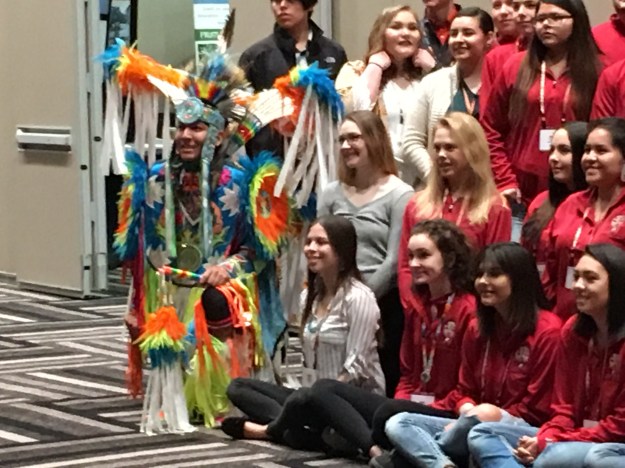
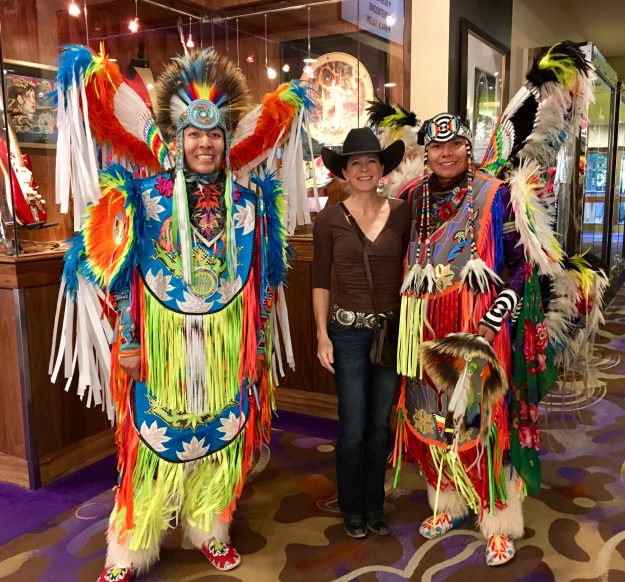
I spent quite a bit of time this week with Native American people at the Intertribal Agricultural Council. It got me to thinking about some of the Indian people I have worked with in my life. I think they stay calmer when dealing with things in life. Maybe we need to do a study on brain wave frequency comparing native Americans to Caucasian Americans.
C52B9BFA-88BE-4B82-9200-8DEBCB0D54D6

Bill Lafromboise is a Native fella that I have been around most of my life. I remember how much he could get done. I’ve seen him walk an orphaned calf from the pasture to the corrals with no problem. He was real good in a corral and cattle stayed calm. I didn’t know what he was doing, but I knew he was different. He kept my vibrations up as he was always teasing me or giving me grief. If I asked him a question he would just grunt.

When I was rodeoing I would watch Native guys and they were always calm and didn’t even look like they new they were about to get on a bucker, then calmly climb on and spur the heck out of one. I really don’t remember them ever having much problems in the chute.

I’ve been around lots of real good Indian ropers, both horses and cattle. It seems so easy for them to coordinate the hand/eye and calmly put everything together with no panic. It seems like their mind is able to slow everything down and just make it so easy, and take us white folks money. I love watching how smooth everything seems with Native people when working with animals.

I think this is something we need to understand. We need to create the proper energy for the animals energy we are working with. I feel this is real critical for getting animals to relax and not be fearful around humans.

The habit so many of us have is to when things are not going the way we want we get exited and add energy. If our animals are not responding properly we might move faster, yell louder and get more aggressive. This results in more stress on the animals and the need for more expensive facilities to match the pressure we put out.

I think a way to look at this is driving a car. If you just stomp on the gas peddle and run full throttle it will be a dangerous and unsuccessful way to drive. You must keep the right amount of rpms with the engine to get the best use of the engine for driving the vehicle. Think of working with your energy with animals the same way. You need to always be changing the energy to fit the conditions. The way you apply and release pressure is very important to how animals work, and keep working for you. Learn to read the animal to understand how much is needed, and learn to be more effective in presenting it to the animal.

As I was people watching my Native hero’s, I got to thinking that maybe because of the lifestyle the people had and as they were more at one with nature because of being a part of it, that their vibrations are more like the animals they seem to get along with. When you go to the reservation or reserve life is very much different than in the white society. It’s much slower and the ego based lifestyle is not so present.
23E4E1B0-2D26-4111-BC72-721BCBEBEA09

This creates some real problems. We are trying to get them to fit into the high energy (vibration) society, and at first it caused them to fight the chute (reservation). But if a horse or a bull fights the chute for to long and the pressure doesn’t come off, they quit fighting and give up.

I think we need to really face up to reality.

Obesity is a real problem. When you are low energy and eat a real high sugar diet, you are going to get problems. I think we need to match the diet to the lifestyle and we need a Native American diet that is different to match up to their specific needs. Meat and berries on the plains?

Drugs and alcoholism is another problem. I feel everyone has certain addictions.
We should try to create positive addictions with animal interaction with production agriculture that will match the society, and creating addictions to creating positive things from ancient customs or modern gadgets. Use the proper energy that fits the lifestyle that creates something someone else needs.
9542DADB-36AC-4555-8309-DCBFEFAF984E

Pride is such an important thing. We need to find the things they can do that brings the pride back to a very proud people.

I really hope we can figure this out. We need to help each other and learn from each other to make it better for all of us.

I am going to keep watching and learning from my Native mentors on how to match my pressure to what animals and people need. I really want to thank them for that.

Sheep Herder

I have just finished a very different and enjoyable experience from my normal work.

I have been around sheep all my life. My grandfathers were both sheepmen. I had lambs in 4H. I’ve also owned and ran sheep, worked with small farm flocks and when I worked for the Sieben Ranch Company, The had several bands of herded sheep.

Clark Atkinson was Forman of the outfit and was a great stockman and camp tender.

I went to the Paicines Ranch, near Salinas or Hollister California. It is right smack dab in the middle of the Area of “The Californio’s “ style of horse and stock handling. As I looked up on the steep hills surrounding the ranch I could feel the presence of the great hands of the past in my mind.

This ranch is not into bridle horse tradition or roping. They are an organic certified property that raise grapes for wine, and are very passionate about improving the quality of all resources. They want to do this with proper farming and grazing practices. They have hair sheep that they graze, and rent the native range for grazing cattle.Everyone I met on the ranch was very passionate about what they believed was the way to do things, and were very positive in the approach they took.

The first day we had all the staff present and we discussed stockmanship in the morning and followed up with working sheep in the pasture and put them in and sorted and worked in a nice system in the afternoon.

The next two days they hosted two separate groups and we used the same format. We had real good, like minded folks all wanting to work with livestock better. We had lots of dog trainers, some folks that handled lots of cattle and people just getting into the sheep and goat business.

It was somewhat of a challenge with lots of people working the sheep, but I learned a lot the first day on how to handle things and I feel folks actually learned more because of some of the challenges we had with getting the sheep to go in to the pens. I got lots of exercise as well!

I learned a whole bunch of different thoughts on production of food.

At this operation(from my observations )they don’t have to fund the operation with immediate sales, but are trying to build infrastructure and soil and hope it returns a profit someday. Most places don’t have that luxury and have to make a profit or it is not sustainable. This creates a whole different set of options to do business. It allows you to try things that would not be possible if you have to make money to continue. I feel this is real important to have in our culture so we can learn to improve practices from trial and error, without any outside influences, so we get an accurate test for those that have to have profit for continued operation.

We need what some see as crazy or lunatics so us “normal” folks don’t seem crazy for trying something different or new.

From my observations when you have to much debt you can get yourself stuck in a system that you can’t change even if you want to, and that has become the trend in our society these days. The best thing to do is build knowledge first and then grow the enterprise you desire slowly.

A good example is college. We have students coming out with lots of debt and book knowledge, but they don’t have the practical to go with it, so they are not worth what they need to get paid in order to live and pay off the debt they have acquired.

At the ranch, they have a great bunch of young enthusiastic young people with a perfect balance of some with very good practical experience to balance it all out at the ranch. I really enjoyed observing it all.

Now, if you know me you know I’m not the biggest believer in “certified organic”.
I feel we should be way more concerned about the nutritional content of the food we eat. If you eat cardboard that has no chemicals on it, that doesn’t mean it’s healthy. Healthy nutritious food comes from healthy nutritious soil.
We can debate how it’s grown, but the fact is our body’s need certain vitamins, minerals and nutrients to be healthy. Healthy soil creates this and that is what we all should be trying to produce.

To me it seems someone should produce a meter you can buy and when you are shopping at the grocery store point it at the vegetables or fruit or meat you are going to purchase and it reads the nutrient content and that is how we should pick and price our food.

Then we would be paid for the quality of the product we produce, and science and technology would be helping us decide what we are purchasing rather than marketing.

I feel we need grazing animals to really help our soils. Good farming and animal management is real important no matter what the production system is.

My job is not to judge on what production system is right or wrong. My job is to try to help folks understand how to improve production and quality of life for animals. It’s not the system that creates stress on animals as much as the people in charge of the system. Cattle in a feedlot can be just as content as cattle on pasture and visa versa. The skills of the human can make it better or worse. That is what is important to understand if you are involved with animal production. It is a skill, and skills can always be improved upon.

So I try to learn as much as I can, and enjoy as much as I can wherever I go.
I learned very much from my trip to California and had a great time doing it.

I really was impressed by the young folks I hung out with. Claudio, may end up being the Governor of California someday. Jesse is the impressive, caring, light up the room type of person that really adds to this world and I really, really enjoyed hanging out with her and her dog Kip.

Donny and Kelly were the confidence and knowledge that kept it all smooth, and the rest of the bunch were real good guys with lots of energy and getting it done.

On the ride to the airport with Kelly we discussed lots of things but one thing he explained to me really made sense and I think it’s a good way for us all to look at agriculture and the soil we use to produce our food.

Their philosophy is to take the cream and leave the milk. That is a great visual for me to see sustainable agriculture. Smart guy.

I did get to spend part of one day horseback. They contract graze the range and they brought two loads of cattle in while I was there and I invited myself to ride with Joe and Buck. Good hands that rode good horses and had nice dogs and really saw the value of working with the cattle to settle them and get them used to single strand electric fence with proper handling. Another real nice day of stockmanship with like minded people. Have I ever mentioned that I have the greatest job in the world?

I am in Denver at the airport, headed for Minot, North Dakota for a Stockmanship and Stewardship presentation, then it’s off to Las Vegas and the Mandalay Bay for some demos with “Intertribal Agricultural Council” during the WNFR on the 11, 12 and 13th of December. It’s been a long time since I have done demonstrations at Vegas and looking forward to working with Wife Tammy and Daughter Mesa as well as our friend Kelsey Ducheneaux.

The thing we should all remember in agriculture is we all may not have the same methods but hopefully the same goals. It seems to me we should try to produce good food at a profit, in a manner that the soil and environment stay the same or get better as we produce.  That seems to be sustainable.  Don’t be afraid of someone who’s practices are different. Even if you don’t agree with them, you still may be able to learn from them, and if you create the right situation you may even convince them to look at what you think is right and change the mindset.  You won’t do it with force or anger.


NCBA Trade Show Agenda

Just received the agenda for the trade show demos we do for the NCBA.  Todd MacCartney (Bubba) and Dean Fish (Coy- Remember Shriners convention song) are the front side of the team and get everything set just the way we need it to make it a very popular part of the NCBA convention.  They are very passionate about being passionate about what they are passionate about.

If your in the area, or can get a cheap Allegiant flight it would be a good way to learn and enjoy many things BEEF.  I believe you can get a trade show pass or get in all the convention activities.  We never get to much of the other stuff as we are working, but I walk around the trade show and it is amazing what is available to see.  Google Ncba’s beef industry convention or check at “beef.org” and I think you can get info.

90085692-B873-4DC6-B418-DB95E5C3E4B9

1AF387A0-02AD-4D18-95D7-2928BB371535

2018 Trade Show Demo Arena Agenda
FINAL
Wednesday, January 31
Trade show hours: 4:00pm – 8:00pm
Trade show reception: 4:00pm – t8:00pm
Colt Starting with Curt Pate
Watch one of the best in the business properly prepare a young horse for its first saddling and first ride. You’ll enjoy seeing Curt work with the horse’s natural instincts to gain trust while instilling respect and control. Even if f you don’t break horses yourself, Curt’s demonstration is enjoyable to watch and offers many tips for anyone who handles horses.
4:30pm – 5:15pm Colt Starting: Lesson #1
6:00pm – 6:45pm Ranch Horsemanship​​​
7:00pm – 7:45pm Colt Starting: Lesson #2

Thursday, February 1st
Tradeshow hours: 9:00am – 6:00pm
General Session/CattleFax: 7:30am – 9:30am
Tradeshow reception: 4:00pm – 6:00pm
10:00 – 10:45 Colt Starting: Lesson 3 – A promising young ranch horse gets its 3rd lesson. (Curt Pate)
11:15 – 12:00 ​Handling Young Cattle – Calves often don’t think, act or respond the same as older cattle. So proper first interaction can make a big difference as to how they handle and perform as mature stock.
(Dr. Ron Gill and Curt Pate)
1:15 – 2:00 Focus On The Family – When it comes to working cattle, don’t forget your low-stress-family-handling principles, too. (Dr. Ron Gill, Curt Pate, Tammy Pate)

2:45 – 3:45 Calf Branding – No matter how your outfit brands, learn strategies that can reduce livestock stress and increase performance. (Dr. Ron Gill and Curt Pate)

4:30 – 5:15 BQA: It All Starts with The Calf! – Handling and processing calves using BQA principles lays the
foundation for success from gate to plate. (Dr. Ron Gill)
Friday, February 2nd
Tradeshow hours: 9:00am – 5:00pm
General Session: 9:30am – 11:00am
Tradeshow reception: 3:00pm – 5:00pm
9:30 – 10:15​ BQA: It All Starts with The Calf! – Handling and processing calves using BQA principles lays the
foundation for success from gate to plate. (Dr. Ron Gill)
10:45 – 11:30​ Focus On The Family – When it comes to working cattle, don’t forget your low-stress-family-
handling principles, too. (Dr. Ron Gill, Curt Pate, Tammy Pate)
1:00 – 1:45 Colt Starting: Lesson 4 – A promising young ranch horse gets its 4th lesson. (Curt Pate)
2:15 – 3:00 Handling Young Cattle – Calves often don’t think, act or respond the same as older cattle. So proper
first interaction can make a big difference as to how they handle and perform as mature stock.
(Dr. Ron Gill and Curt Pate)
3:30 – 4:30​Calf Branding – No matter how your outfit brands, learn strategies that can reduce livestock stress and increase performance. (Dr. Ron Gill and Curt Pate)