
I am returning from the state of Vera Cruz Mexico and have just completed a week working with Zoetis Mexico. It was a week I will never forget, and it was much better than I anticipated on all counts.
I have always liked the Mexican culture from what I could see from the U.S. from watching movies and working with many Mexican immigrants. I have spent some time on the border and have always liked it. Tammy and I have always enjoyed authentic Mexican food and Mexican culture.
I flew into Tampico last Sunday night and was picked up by Roberto Pena, whom I had met at the feedlot challenge In Alberta earlier this year. I liked him immediately when we met and felt very comfortable with him taking care of me.
We met the rest of the team the next morning, and LuLu was my interpreter for the week. I had met her in Lethbridge as well and she helped me communicate with the feedlot owners from Mexico while in Canada. Everyone else was very friendly and we headed to the first feedlot.
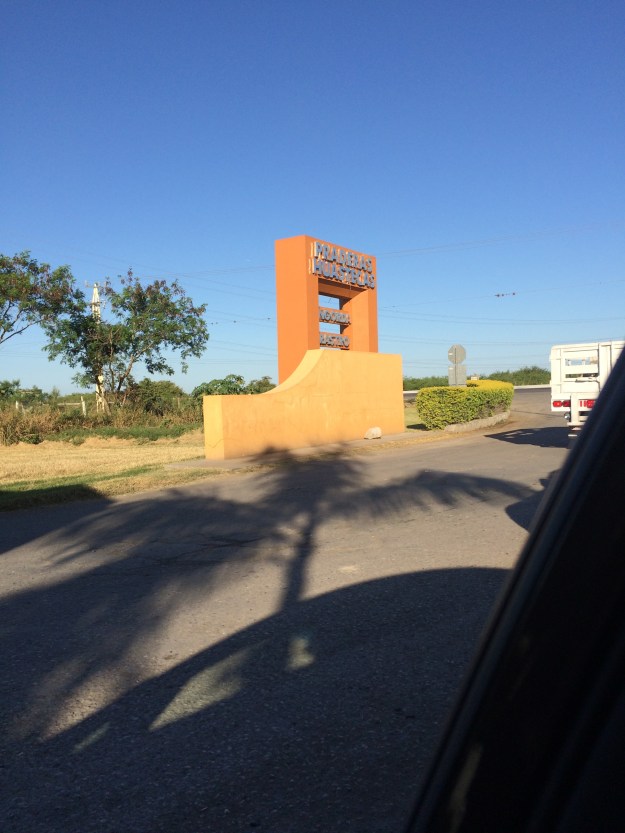
The driving is crazy. We got to the first feedlot, “Praderas Huastecas” and the security was pretty intense, as in guys with machine guns walking around. After lots of Mexican chatter and checking Identifation we head in. It was not like driving into a feedlot, but a resort. Palm trees and manicured lawn and flowers like you see going to a resort. We pulled up to the first building and it was beautiful Spanish architecture and grazing cells full of cattle. It was as pretty of a place as I could have imagined. They feed 120,000 head of cattle and have a slaughter house right at the feed yard.
They had set a tent up with chairs and I presented my cattle handling talk complete with water bottle and Greeley hat for my power point presentation to two different groups. I was very nervous as to how the workers would accept me and how well it would be with the interpreter. LuLu was excellent. She had ear buds for everyone and could keep up so it was easy to give my presentation. I could tell they were listening and accepting what I was saying by the body language and facial expressions.
Next we went to work working and not talking. As we headed back towards the pens we had the slaughter house and feed mill on one side and the private golf course on the other. Everything was first rate and very modern. The pens were very long and narrow, and had lots of shade as heat was the big challenge. I didn’t notice at first, but every male bovine in the feed yard was intact. They don’t castrate. They feed everything as a bull. Many are Brahman/Brownswiss cross and Zebu. It was quite a site to see that many and the pens were real full.
Buller activity is around 2% if I remember correctly.
No one really explained why they kept them as bulls, but they are concentrating on quantity as the quality is difficult to achieve in the climate they are producing in. I think they are figuring ways to improve the quality, and all the beef I ate was excellent in flavor and tenderness(and we ate a lot of beef last week).
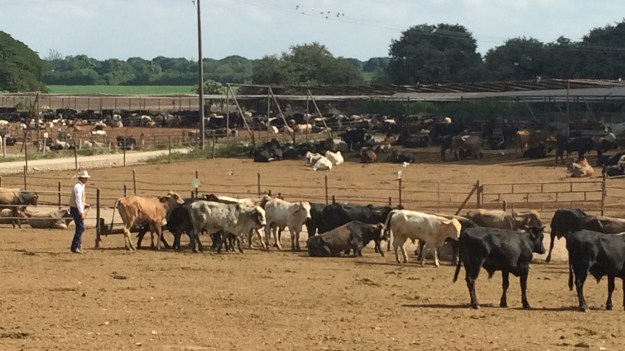
All bulls in the pens
My mind is kind of a blur and I can’t really remember what we did first when we actually started working cattle. The thing that I do remember is how good the cattle were to work. They were very gentle and responded very nicely to pressure. All week long I had so much fun working these very nice disposition cattle.
Next morning we left the hotel at 4:30 and were at the shipping pens to watch them load cattle. One division was on the other side of a busy highway so they hauled the fat cattle to the slaughter pen facility. The bulls loaded great and the man that was loading the cattle was excellent and had been doing it for a long time.
Next we went and observed them pull a pen of two hundred and went along while they drove them about 1/2 mile to the holding pens at the abattoir. It was very difficult because the alley was only ten foot at the start and then went to twelve with lots of corners and challenges. They always lead cattle in front, but they still come back on them. I suggested less numbers and installing two block gates to allow the person at the back to go to the front to get them started again. The vaqueros were glad to hear that and had been asking for it before. All cowboys have this strange sense of humor and dealing with things, and they called the alleys from the pens to the slaughter pens “autopista hacia el Cielo” which translates to “highway to Heaven”.
We all met up at the receiving area and watched them unload trucks and pen the cattle. They brought breakfast and coffee. I was hungry and it was good. The coffee had sugar in it and was very sweet. We had tacos with meat, hot sauce and lime. Everyone was laughing and giving each other a bad time and enjoying each other.
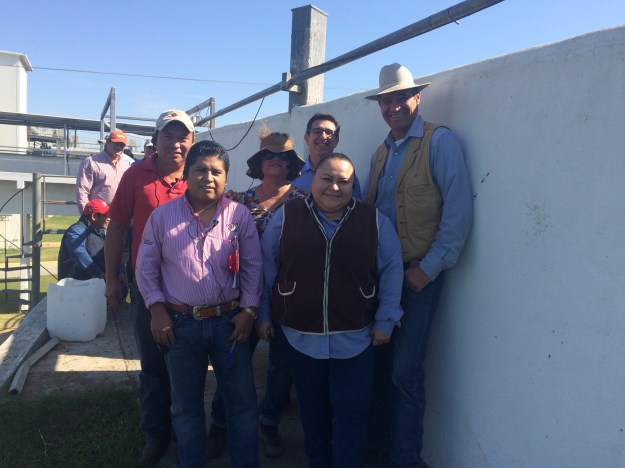
Grupo Gusi managers at slaughter plant.
The cowboys just stepped of their horses and they stood right where they left them. One horse never moved as the truck backed into the chute about two feet away and never moved when the driver released the brakes. That was one disappointing thing I saw was how tired and sore the horses were.
We then went to all the processing areas and observed and I worked some through as I thought would do. The main thing was I took less numbers and didn’t store them in the tub. They had the habit of filling the tub and working them from there. The cattle worked so nice they would work pretty good anyway, but I wanted them to see a little different style, and to see if I could do it. The cattle were very nice to work.
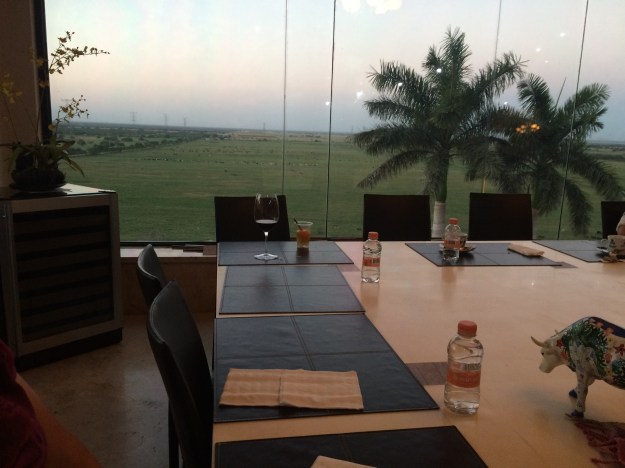
Late in the afternoon we finished up and went back to the main offices and went upstairs to have lunch with the Owner, his Family and managers. It was a beautiful place with a very nice view of the grazing pastures. The tequila and wine went to flowing, and we had very nice cheeses and salamis and guacamole. We sat down to a wonderful meal that was very organized and the waiter was so good at keeping everyone with everything they needed. It was one of the top eating experiences I have had, and I’ve had some pretty good eating experiences. Carne Asada (steak) just kept coming until I couldn’t eat any more. The view, the people and the food/culture was why this was such a great meal. We left kind of late and every one was pretty full of food and drink and content with a good successful two days at out first feed lot.
The next stop was Grupo Gusi, a very similar operation to Praderas , as they are owned by two brothers.
We followed a similar program with the talks first and then working with the crews at each operation. These were both very impressively run operations.
The owners really seem to be very good business, hire good managers, have lots of help with labor, and believe in good facilities and doing things right.
For as big of operations as these were, it appears very well organized and things are really managed well.
We had another very nice meal in the same style as the other. The food was excellent as was the conversation. Not as much wine drank as we had to drive to the airport. As they always seem to do in Mexico, we worked, ate and talked to much and then it was a mad dash to get to the airport. The traffic was terrible and Roberto was really doing a good job of pretending to be a race car driver. We got to the airport late, but as luck would have it the pilots in Mexico have the same style I guess and our plane was late arriving so we made our flight. The other Zoetis guys asked Roberto why he was driving so slow. To much fun!
We flew to Mexico City, got in at about 10:00 p.m., stayed at Airport motel and had a 6 a.m. flight to Vera Cruz, which is south of Tampico and a very nice coastal city.
The feedlots we were visiting in this region were smaller and worked as a group and used the same slaughter facility. I did my talk in the new hospital area they were building. They had installed a bud box and were trying to get it done before we had our day of demonstrations. When we started the chute was not working, and I said we could just put three head in, then back them out and do some others. It was a great place for the talk. The calves in the sick pen watched the talk as well, and instead of using a water bottle to demonstrate position, I just climbed the the fence and used a live calf. It was the nicest place to do a talk ever.
My talk lasted about an hour. We then went and did some work in the pens. I tried to pull a pen by myself and couldn’t get the cattle to move good enough to get them to pull themselves so I had a couple guys help me and they came out real good. It was a good demo on getting more help if needed and how position people to get cattle out of pen nicely. (I still should have been able to pull them myself)
We then went to work the new bud box. The manager was real nervous about if it would work or not. I put three in and they worked perfectly into the lead up to the chute. I closed the back gate and explained what I did. I said we could back them out and try some more. They said the chute was now working. They were stringing wire for electrical when we pulled up, and they got it wired and going by the time we used it! We ran more through, then went to the processing tub and worked in that area. It worked real well and they were bring smaller groups of cattle. They were doing a real nice job of processing the new arrivals.
We went back to the hospital area and they were using the new system. Two young guys were working the bud box and really trying to get it figured out how to use it. They will.
This time the Zoetis team prepared the meal. They cooked the steaks and ribs right next to the cattle. We had a simple meal of meat, tortillas, lime, and green salsa. My kind of eating.
The cattle were great to work with. I was getting real comfortable with all the people, from the Zoetis team to the owner, managers and workers. It was a real nice day.
The last day was like the rest, a very early start, but we stopped and had a great breakfast. Roberto’s son, Luis came with us for the day. He spoke very good English and had a good sense of humor. Family is a very important thing in Mexico. He took pictures for me.
The feedlot that hosted the day we’re Charros. I have been very interested in and have admired the Mexican rodeo skills (charreada) for a long time. I understand a little about it, and these guys were very serious about it. They were a little more horse oriented here and had real nice horses that were in good condition.
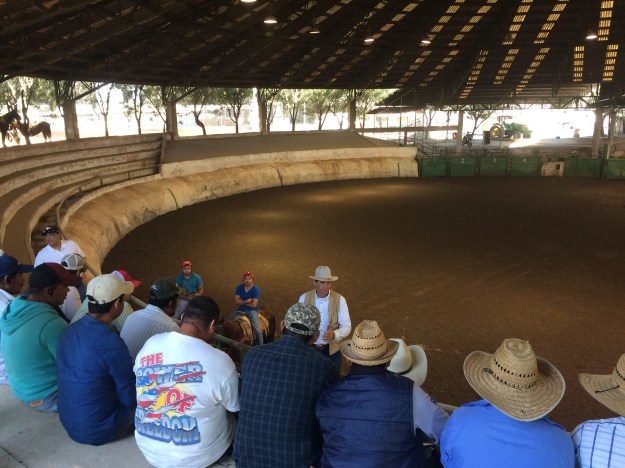
I got to do my talk in the” Lienzo “ which is the arena. I did a little “horsemanship for stockmanship demo”. I’m not sure what they thought of that.
We the worked cattle. I demonstrated pen work, pulled a couple of calves out, then pulled the pen. They went out real nice and I was able to do it by myself.
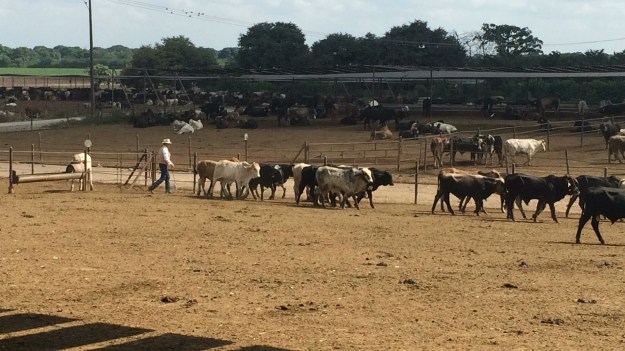
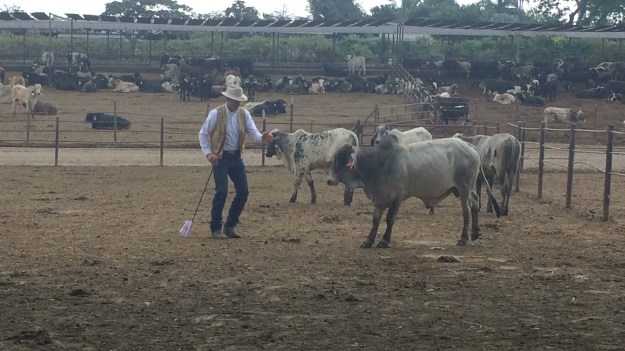
We then loaded up and went to the slaughterhouse they used. It was great. The manager and employees were very into animal handling and welfare. They worked very hard to keep the animals calm. They only moved them in groups of ten and used excellent pressure. I told them about the rules in some plants of hockey helmets and protective vests and they were very surprised that all cattle were not as calm as theses.
While we were there a stock truck pulled up with ten head of finished cattle. The driver backed up to the chute, got out to make sure he was square and unloaded, just like I had done with my grandfather so many times when I was a kid. It was real nice to see a bob tail truck load of cattle. He even reminded me of my grandfather in how he worked.
Back to the feedlot and we had another great meal of steak and beef ribs and tortillas. It was so nice to sit amongst these hard working, good people and to hear them laugh and talk and enjoy themselves. I am starting to understand more words and kind of understand what they are saying once in a while.
We said our goodbyes and headed back to Vera Cruz. The remaining Zoetis crew and I went and had coffee and desert at a nice restaurant near my hotel.
They had certificates for me to sign. They provided them for every person that attended. I sent this picture to my Daughter Mesa as she is good friends with Julio Moreno and thought she would get a kick out of it. In Mexico they use the Fathers and Mother’s family name on documents, so they all had at least three names like this.
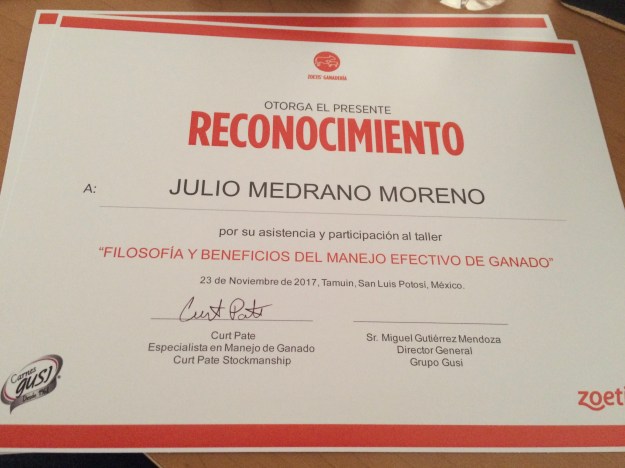
As we visited I started thinking about how much this team was like the team Zoetis has in Canada. I even started matching them up. Shawn Wilson in Canada got the ball rolling for me to visit Mexico in Canada. He and Roberto Pena are very much alike in the way they work. I appreciate what all the Zoetis folks I’ve worked with have done. It’s been a great year working for them in Canada and Mexico.
I’ll finish this long “ Piales” loop up with some observations.
The workers in Mexico feedlots make very little money. They work 6, ten hour days and if I understand correctly they make the equivalent of $100/ week.
They understand how, and do handle cattle very good, at least when I was there. Like all of us, there is room for improvement, and I hope I approached presenting this to them in a way that they will want to make improvements.
The owners and managers want to be the best they can be. They will improve the cattle they feed, and they will be a strong competitor in the finished cattle market in the future. I saw two very nice Brangus bulls that one feedlot is offering semen to their customers. This will be a game changer if the ranchers will upgrade the cattle genetics.
The feedlot system really works in Vera Cruz. The grass is not very strong, and most of the ranchers are not very progressive. The calves come in very week and green and if they can get them straitened out, they really “pop” and the gain is good and the days on feed are short. All the inputs are available at a much cheaper cost. It looks to me like the potential for profit is very good as long as the feeder cattle price stays right.
An improved pasture system with good grazing management, and good cattlehandling skills to settle these calves, get them eating a ration, and to prepare them for the pressure and straiten these cattle out before going to the feedlot seems to be where good stockmanship could help more than anything to improve profit and animal welfare.
The beef we ate was from the feedlots we worked in. It was very flavorful, not tough, and a good eating experience.
The owners, managers, and workers have a much better working relationship than many I see in the US when Mexican labor is used. I think the cultural differences sometimes creates a different reaction in the States. I notice that when a manager is “talking” to the crew, it’s like they aren’t really listening or acknowledging what the “Gringo” boss is saying. I got a very different feel from the crews I spoke to in Mexico than in the US. We need to figure out how to get this same working relationship between workers and management in the U.S.
Maybe we need to change our methods of pressure to get the job done.
At each of the talks, the owners were present at the start of the meeting and had some positive things to say to the workers.
Hand shaking and hugs are a big part of the culture.
I’ll make a confession. I am a little embarrassed about our American lifestyle. We have everything we need and just about everything we could ever want, yet we are still not content, and always want more and have all kinds of what we think are problems.
The Mexican people are happy. From the owners to the poorest of workers they all seemed happy and appreciative of life. It seems to me that the faith (Catholic), family, pride, and food are real important things no matter what position they have in the world. The material things they have are more practical than ego based and I think this makes a big difference.
We hear so much about the bad things in Mexico. I was so fortunate to get to see the good. I’ve got the greatest job in the world!


 Curt Pate Stockmanship