A Month Of Stockman
I’ve had a very interesting variety of stockman and livestock operations in the last month. I’ve decided to give some thoughts on each of them and what I think is interesting and important to share with you. Hope you enjoy our trip!
The Squaw Valley Ranch is a large ranch located northwest of Winnemucca and owned by a gold mine company that is very interested in public image as well as improving the environmental diversity of the land.

The team on the land are what I would call “modern traditional”. The sagebrush sea they operate in requires the same buckaroo skills that were used 150 years ago, and the horse and rope are still a big part of the tools to get er done.
The trot is very important as you need to cover lots of country, and your horse needs to have the desire to go to keep up with Jake, the cow boss who has lots of go in him! He’s a great stockman that some of the old time cowbosses would be proud of his skills. He’s good with horses, cattle and men and has a wonderful family.
Squaw valley crew stays at camp some of the year, and trot out just like before stock trailers and pickup trucks. When I was there we stayed at houses but had to leave at 3 am to get to the range to ride at daylight. We were moving pairs to new range in accordance to the grazing management that they had in place.
The “modern” part of the traditional was the environmental goals and the animal welfare needs of the gap program they were involved with. Jesse and Ricarda Braatz, the managers have their minds and goals on the future and what the modern customer wants in the beef they consume.
Big country, traditional stockmanship, caring for the land and the livestock plus the involvement of the families of all levels of help on the ranch made it one of the places I really enjoyed visiting and sharing like minded ideas.
There is something special about stepping on a horse at daylight and trotting out with a crew to do the work that so many have done in the past. As the crew trots behind the cow-boss you always have different “values” of help. The shape of your hat or the length of your leggings have nothing to do with it.
The higher level of horsemanship, stockmanship, and peoplemanship skills you have the more value you add to the crew. It’s a great tradition and many parts of the west follow the same traditions, but the country changes some of the work and gear. I don’t think this very country will let this long standing way of doing things change much, but I do think technology, just like the pickup and stock trailer will make it easier and more efficient.
I have been so fortunate to ride with some great keepers of traditional ways in different places from Hawaii to British Columbia to Texas and lots of places in between. A good hand is a good hand no matter where you are at, and there are lots of them and I believe there are getting to be a higher percentage of them in the last ten years or so.
One of the great changes we are seeing is more women involved in the work. We have always had women helping on family ranches and smaller outfits, but now we are having couples working on big outfits as well as single women and that brings a whole new dynamic to things and it’s for the better.
Properly managed livestock are needed to replicate the cycle that makes the arid climate of the west work. We need to keep getting better at understanding what makes it work, and we need stockmanship and stewardship to implement what works.
I think in the west this is the most important thing to make changes for the positive in our environmental future.
Some people are made for this life of horses, cattle and land. Big country and long hours in the saddle is not for everyone. Material things don’t seem to matter much (except for good gear) and overconsumption seems to be a waste, and the living land and animals are what life is all about.
This truly is the oldest and most traditional stockmanship and stewardship of the western culture, and as I said before the Squaw Valley outfit is one of many outfits carrying on with the tradition in a modern way.
Billings Livestock
I spent much of my youth going to livestock auctions with my Grandfather’s, mostly my Grandpa Leonard.
He hauled cattle for people in what was then called a short truck, a two ton truck with a 16 to 20 foot stockrack. He would also buy cattle for people at the sale and deliver them to their place. He would help brand and vaccinate them if needed and usually hauled them back to the sale when they were ready to sell. It was a good service and he would go to the Bozeman sale most Monday’s, Butte on Tuesdays, and Great Falls sometimes and that was a Wednesday sale. He also bought canner horses and we would haul them to Great Falls to Jacobs Livestock or to Shelby to goon to Canada and Boveree Pack.
I started going with him when I got off the diaper and the bottle and when I got old enough I started driving, and when I got my license I would haul by my self sometimes.
I always enjoyed a good auctioneer, and I listened to some great ones, Craig Britton, Ken Peters and Jack McGuiness, could all really sell and new cattle and they are the ones I listened to most.
My grandpa was real friendly with the people he dealt with and they all enjoyed him. He never had trouble with brand inspectors or employees as they all liked him. He new how to get things done, and he always made people feel good about a deal, and he had lots of business.
There used to be people in every community that provided the service he did. When gooseneck stock trailers came along it pretty much did away with the need for cattle being hauled as everyone hauls there own.
It was a great thing in my life and I learned so much about livestock , people and business going to cow sales and horse sales with my Grandfathers.
Even now, if I am somewhere and have time to spare, I’ll see if there is a livestock auction selling and go look, learn, and listen and enjoy the true price discovery and backbone of the livestock industry. I love it.
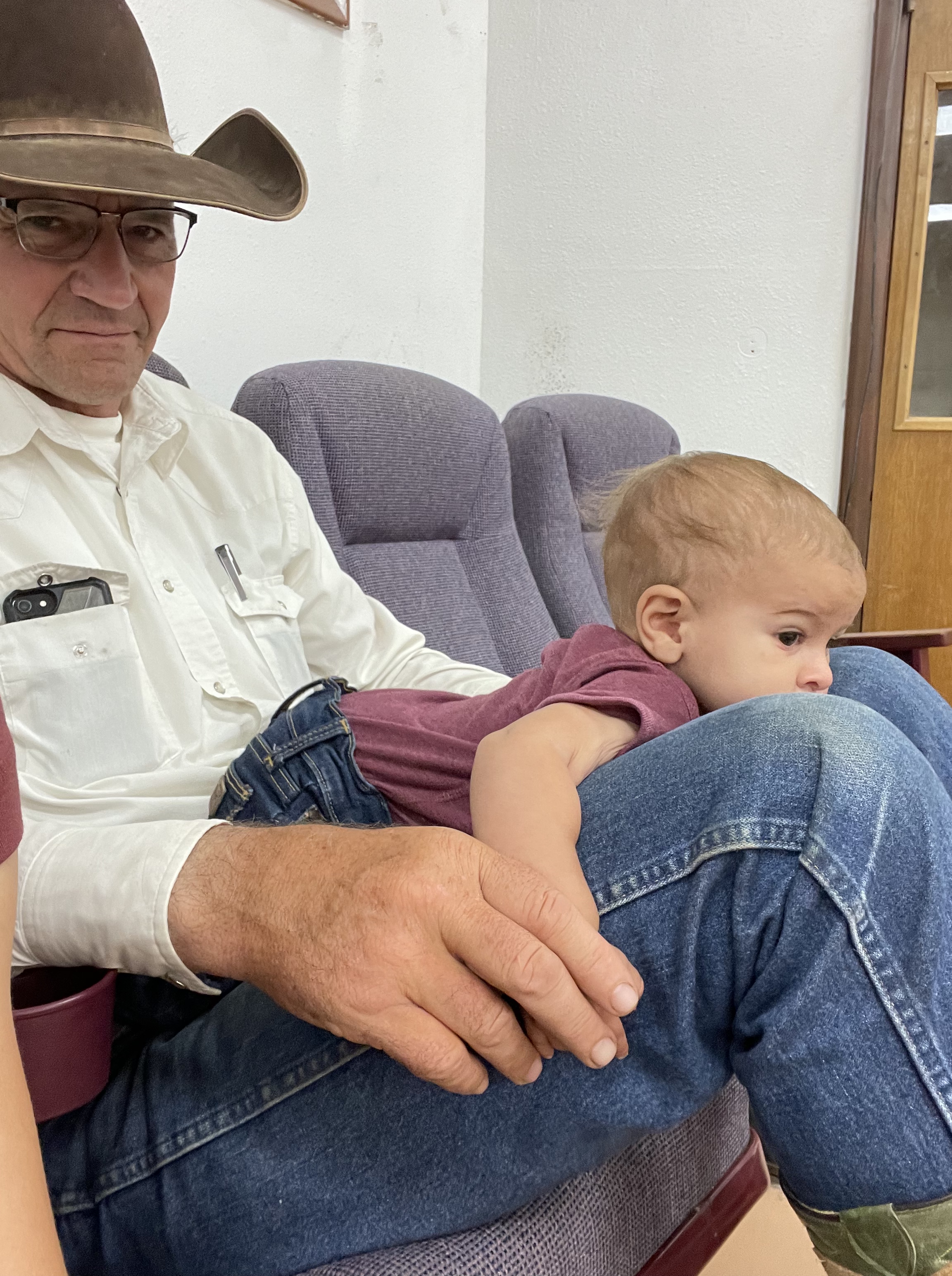
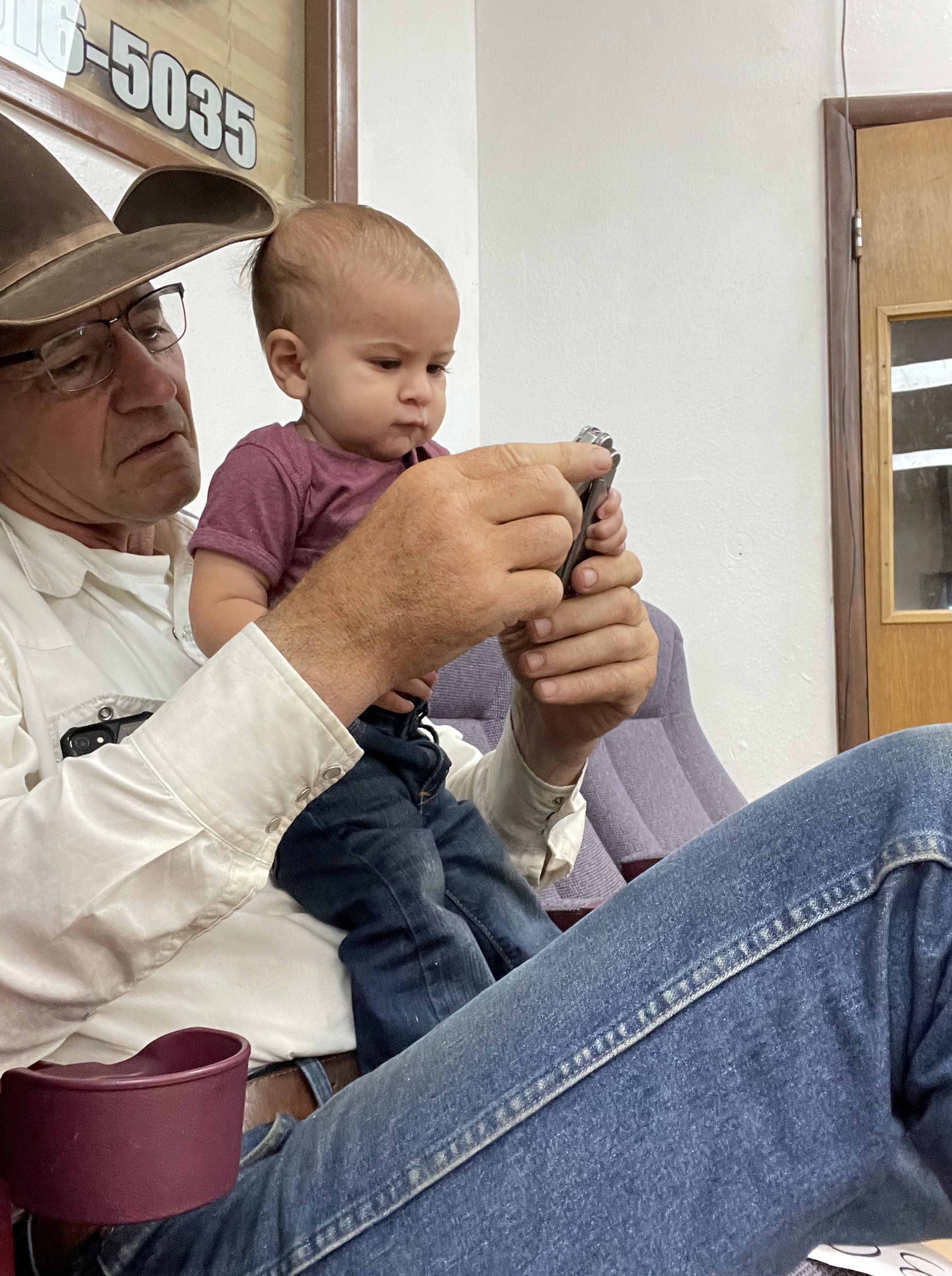
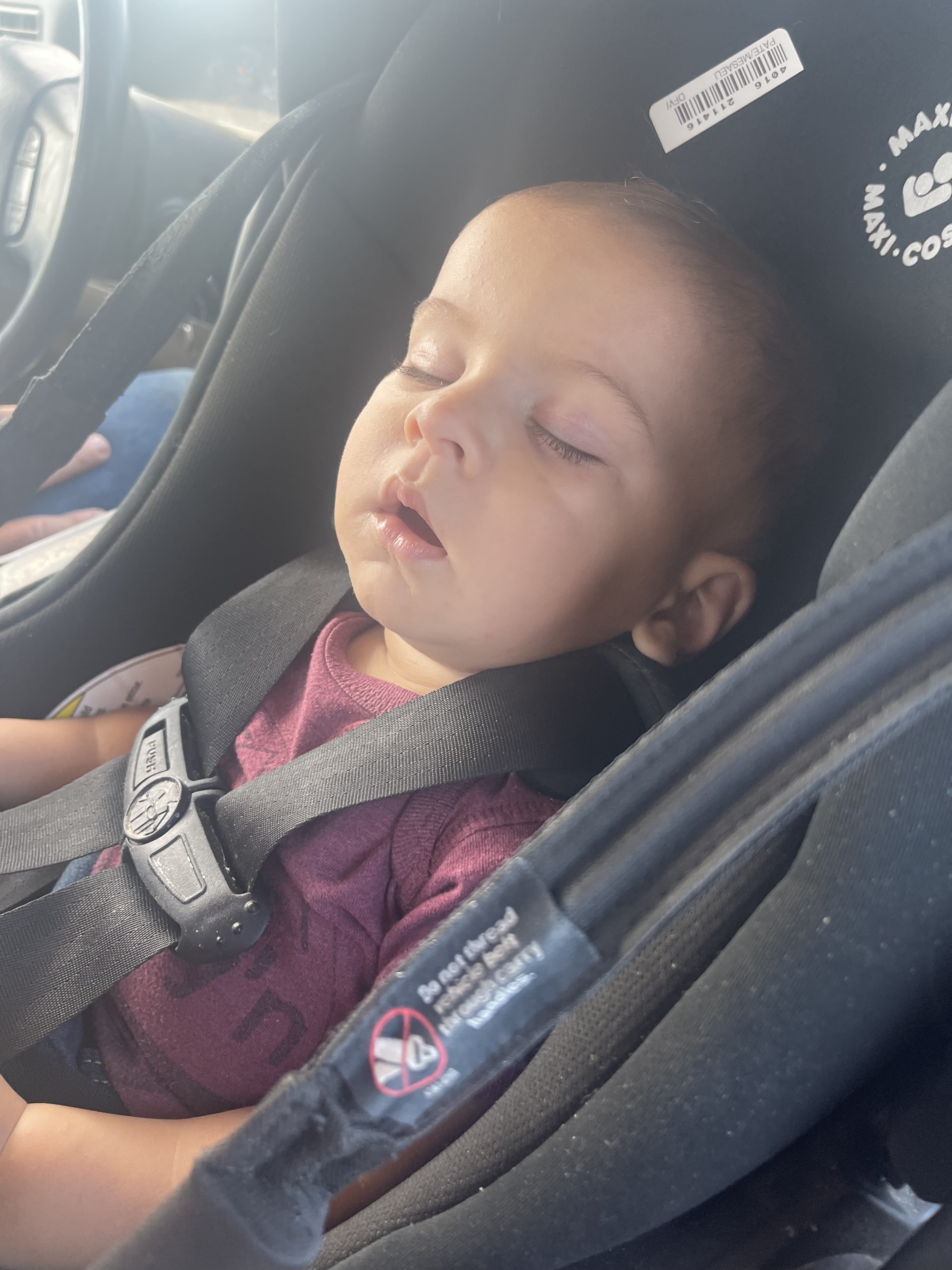
Today was real special as I got to start over again. Daughter Mesa, Grandson Haize and I went to the cow sale at Billings Livestock today. We only got four Heifers bought, as the didn’t have many feeder cattle, but it was a fun day and hopefully it is starting the cycle over again. He was great and seemed to enjoy it. I hope it was the first of many!
 Curt Pate Stockmanship