Bawling calves and Run-away Horses

Been doing some different work the last few weeks. I presented at the Black Hills Horse Expo last weekend. I enjoyed the interaction with everyone. The people in that area are great, and I had lots of Native American interaction with our friends the Ducheneaux family and Phillip Whiteman. I really like spending time and learning the ways of the native people to help improve my quality of life.

I just don’t feel as comfortable presenting to horse people as I do cattle people.
I feel my ideas are not always what horse people are looking for. I think folks are so into performance, they can’t see how important the balance mentally and physically is to all aspects of horsemanship.

I took a horse I have been riding I call Jaxson. He is a real good lookin horse that I was given because he would get real scared and run off. He was real hard to catch and was not very much fun to ride.

75A7260D-CC15-430C-A851-783248991A6B

I’ve been really working on getting him hooked on to me and not panicking when he had to make a transition in his mind. What would happen when you were riding him is he was always on alert. If you rode through the brush and your hat brushed the trees he would panic and sell out. Then he got to just going in the brush made him panic. He got to wear he was making himself panic. So I really worked at getting him to transition from standing to the walk without panicking. If I used my legs it was to much pressure, so I would lead him to a walk from his back. Going from a walk to a trot if you used your legs he would grab his butt and run off, but if you just drew him to the trot with your seat, and didn’t get out of time with him when he went to the trot he could take it, and would make the transition with out much trouble. He was real sensitive and if you did much more than think about it, it was to much and he would run off.

I really worked at getting him to settle and find a comfortable spot with me on the ground or on his back. After he got to really hunting that spot, I could use that to my advantage when he got scared. If he got to grabbing his butt I would take a hold of him and put lots of pressure on him with my legs and body until he was hunting for a way to get out of pressure, and then he would start to look for a way out rather than just running off completely.

I haven’t ridden him much in the last few months because I was on the road so it was fun to load him up and take him to Rapid City. I had never ridden him in an arena or inside so that was fun. He got a little bothered, but did great and really looked to me for support. I really like him and am learning lots from him.

The thing that I try to do with him is get the mind first and then the feet, but if the feet are going to fast I have to slow them down so I can get the mind. I have to get out in front of the mind to get the feet.

82AB96D0-7AF8-475F-B5ED-886735F5C2AD

I flew from Rapid to Calgary and spent last week working with Troy Sauter of team Zoetis and some of his clients. They were all backgrounding lots and the calves have started coming to town. I heard lots of bawling calves and smelt lots of burning hair from branding.

I got to visit about fresh weaned calves with lots of these folks. This is a spot in our industry that is very important. This is the most stressful part of a calf’s life and the place we have the least understanding and skill of how to take care of it.

Zoetis has a product called “Draxxin”. If you give it on arrival, you have a window of time before you need to treat a sick animal, 14 days more or less depending on the opinions of management. I have found this is a very good time to get these calves settled down and accepting the new life they know nothing about.

Most of the time by the time these calves get to the lot, they are very stirred up from to much pressure. They have lost the comfort of the momma cow, their diet has changed from milk and grass to some strange feed they may not like or even know what it is, and if they have never drank from a water trough or ate from a bunk it may be real disturbing to them to try either one.

They have always followed momma and now she is not there and there is a human yelling or hitting them or scaring them to get them to go in a truck or through a gate. Every experience is extreme and very different from what life has been for them up until this time.

Now we receive these calves and they get sorted, put through a chute, vaccination, branding and some dehorned. More stress. They have everything in the world against them, in their mind, and physically in their body.

These calves need help. Science(Draxxin) is a huge help, but if we can add stockmanship and stewardship to it, then we are getting something real positive happening.

If we could get everyone to understand how important it is to get these calves weaned properly, with good handling as well as keeping the calf with proper nutrition and rest through the whole process. Having good facilities that allow safe and effective handling until the calf gets to its new home pen.

This is not happening. So many of the calves that get purchased are really challenged with stress. They are much like the horse Jaxson I talked about earlier. They can’t take the pressure, so we need to help them and get them to where they can survive and thrive in the new life they are in. We need to help take away some of the pressure.

Many of these calves have been over pressured and they think that is what every human is to them. You need to change the way they think of you. If you are in a pen with them and they have lots of movement, I like to get in front and get them to looking at me with both eyes and back up to draw their mind to me, and try to stop them with them looking at me and not turning back. This is very important because of the way they have been handled, they want to escape the human pressure, and you are changing that to following the human and paying attention rather than escape. I call this “hooking cattle on”. It is real good for the cattle to change the mindset from running away from you to looking at you with their feet still. You have just changed from a predator to something of interest.

This is so important for getting the calf in a state of mind to do well. If they think about running every time you are present, they have stress. Just like my horse needing to get his feet still and not wanting to run off, before he can progress, it’s the same with the calf that is being weaned.

The first step is just getting them to stop and wait. They may start again and you can do it again if they stop soft, they will leave soft. If they stop fast they will leave fast.

If you are a caretaker of livestock I think this is something very important to think about. This is so hard to get people thinking about with stockmanship.
To me I feel what we have been discussing is the most important part of effective interaction with animals that we are trying to get to improve in performance. We can go on with what to do next, but I think it would be good to wrap your head around this first.

I wrote part of this while sitting in first class, and am finishing it in the United room in Denver. Because I fly so much I sometimes get upgraded to first class, and with my “platinum status” on United, when I fly internationally I get to go to the United Room.

It’s real nice. There is a bar, food, real nice chairs, and some of them even have showers. It is a very nice place to be when dealing with the stress of traveling.
Why not wean your calves like they are in first class, and give them as everything they need just like they do here in the United Room? It won’t cost you money, it will make you money and you will be doing the right thing. Why wouldn’t you?

Life is like a piece of Sausage

I really enjoy sausage. My Grandfather made real good breakfast sausage.
We had a slaughterhouse house when I was younger and he jokingly called his sausage, 3 brand sausage. When asked what that meant he would say “tits, tails and touch holes”. I always got a kick out of how people reacted to that.

I’m on the plane home from a three week long trip. I have been to Colorado, New Mexico, California, Oklahoma, British Columbia, and the last week Alberta.

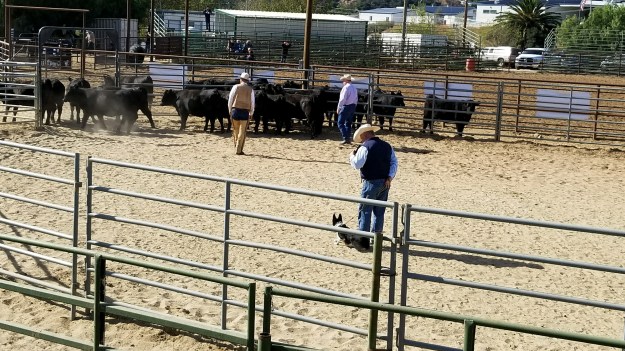
Yesterday, was a great finish to the run. We sorted and processed a bunch of bawling calves, did a little horsemanship demo, and then finished up with some of the best homemade sausage I have ever eaten.

Rick Hagel was the host. We had a nice mix of people in attendance, and Rick was great at letting the three high schoolers learn by doing and trusted them with processing the calves. They did a great job, had a great chance to learn because their parents were interested enough to get them involved, and everyone else shared knowledge with them. Great ingredients for making good young producers.

As I was eating my steak last night and thinking over my past three weeks, I got to thinking about all the sausage I have eaten. I try to eat pretty low carb, so when I stop and want a snack I usually buy some kind of sausage. In California I had linguisa sausage for breakfast every morning. At Cal Poly we just about foundered on the sausage they served at the barbecue. Gord Collier and I always eat lots of “pepperonis” as they are called in Canada. So as you can tell I like sausage.

87225CDA-697B-40A1-A89A-25A7E301A9DA

Eating Spam In Hawaii

The thing that makes a good sausage is the ingredients. The right mix makes it the right taste and texture for different tastes and purposes. Not everyone likes the same sausages. It’s all about the ingredients.

At all the different places I went, they were all a little different. The folks at Fort Collins , Colorado were a little different than the folks in Cal Poly, California.

I went to a “rope and stroke” (team roping and golf) in British Columbia and the ingredients (people)were a little different than the ranch roping I went to a while back, but they both fit the tastes of the people involved.

Of the three operations I went to last week with Katie Roxburgh with Zoetis, the ingredients of the crews were very different, but all made good teams to produce beef.

So I came up with the idea of livestock production is not like a box of chocolates as it says in the movie “Forrest Gump”. It’s like a piece of sausage.

You can have a crew or family that make up ingredients that don’t fit together or blend very well and get by, or all the ingredients can be high quality and blend together to really create something that sticks together, compliments and blends well together to make a very good product. It’s even better if you are always trying to improve the quality of the ingredients that make it even better.

D2EB0760-A4AA-4A37-B12C-A931D4FA9752

My job, in trying to improve stockmanship skills is all about improving the ingredients that are available. The better the inputs the better the outcomes.

We producers must understand that we need to make sausage that we can make at a profit, but also make sure the ingredients fit the customers tastes. If you don’t like or trust the sausage, you’ll eat less or find something to replace it.

So there it is, my worldly wisdom. Life can be like a box of chocolates if you choose, but if you control the ingredients it’s like a stick of sausage.

Put that on the fire and Cook and eat it.

805AD554-FFDF-4A9F-A8C1-F40FDBDC10A4

Learn to Learn

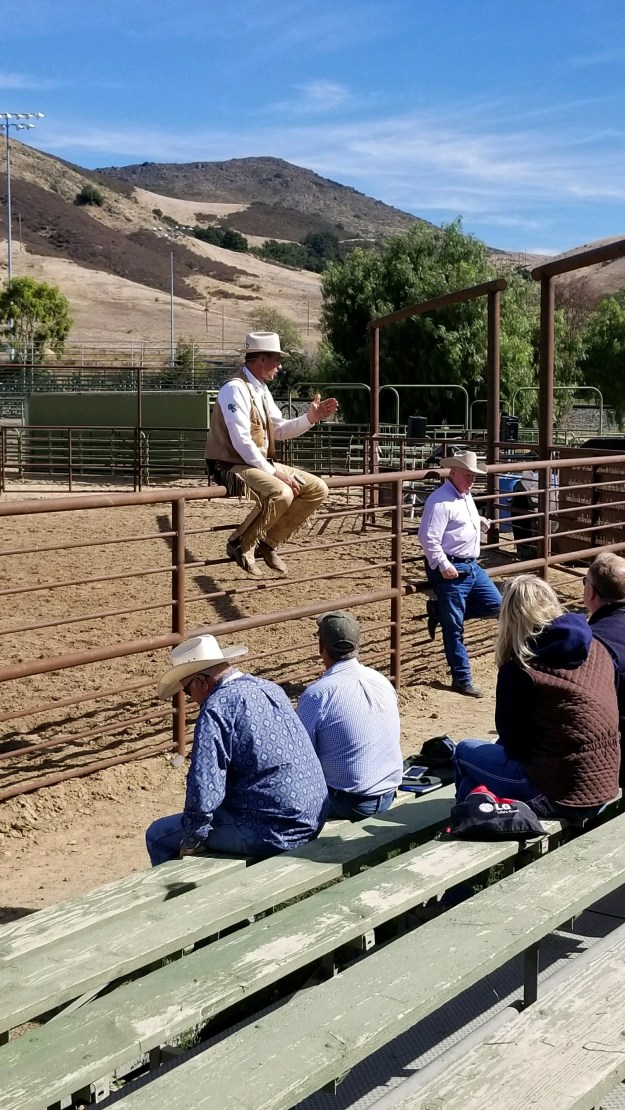
Just finished the final of five Regional “Stockmanship and Stewardship “ events in San Luis Obispo, California.

I have been working for NCBA presenting stockmanship for quite a number of years now, and feel like I have had a great opportunity at acquiring knowledge of the beef industry from all the presentations I have sat in and learned from.

I have learned about economics, nutrition, marketing, consumer trends, genetics, genomics, veterinary procedures, proper use of vaccines and antibiotics, how to cut a flat iron steak, how to deal with media, how to deal with protesters and a whole lot more. From all the knowledge I’ve received I should be about the smartest guy in all the beef industry. I said should be!

2406D6F5-C8E4-47F0-80DE-211A4CBE9EBD

I’ve seen some really great presenters, and suffered through some terrible ones and tried to stay awake on some of the boring ones.

I think the favorite thing about my job is learning from so many great resources. The BQA state coordinators that I have got to work with are great. They present the materials to guide producers to produce high quality beef from the ideas they present.

I have listened to the originators of BQA to the young guns now carrying the torch to better beef, and it just keeps getting better and changing with the needs of the future, and present. It is really great.

1D311BBD-F9E1-4248-A73F-9572467A8A6B

Rene Loyd and Ryan Ruppert were the first to really bring the stockmanship and stewardship program to the NCBA. Ryan was a big believer in the program and worked very hard to get it on as many programs as possible. We had a real good program with sponsors for three years and then the support wasn’t there and it held its own for a few years, but even though people wanted it it really wasn’t promoted.

They got a new crew in the education and BQA head in the NCBA, and to be quite honest I thought it was going to be more of the same. They made the same promises I had heard before, and were a bunch of young folks that operated quite differently than what I was used to. I didn’t think they were going to get much done.Well, I was wrong. They stepped up and got it done. “They” being a bunch of young people that text while you are talking business, (most times they are doing business)having dinner and while you are presenting. “They” being a great mix of young folks that make sure they are providing everything the presenters and attendees need to make the event successful. “They” being the ones that make the event happen, but never need to be the center of attention. “They” being the ones that create the social media outlets that connected thousands of people to the knowledge we were presenting to the hundreds live. They were always polite, accommodating, and were as comfortable with seasoned producers as students. I never saw inappropriate behavior from any in all the events. “They” were great.

C07E747B-D1C7-4F09-82A0-B0E4AB8088C1

Chase DeCoite is the head of Beef Quality Assurance for NCBA. I was not used to how he did things when he started, and didn’t really understand how he did things and didn’t think he was doing a very good job for Stockmanshp and Stewardship. Well I was wrong again. He has attended all 5 events and has done an outstanding job of leading and presenting. I have enjoyed watching him get better and better at interacting with people, improving his speaking skills, and most of all, in my case, when he says he will do something, he does it.

Jill Scofield, Rob Eirich, Brandi Karisch, Libby Bigler and Jill Scofield (Jill did two events) took good care of us and put together great programs for producers. Much work and not near enough recognition or pay for the effort.

Jill asked us what the most significant thing that stuck out from all the programs we have done this year. We started out in Davis, California, then went to Lincoln Nebraska, Jackson Mississippi, Fort Collins, Colorado and finished up at Cal Poly at San Luis Obispo, California. I would have to say the diversity of the producers we met, but the desire to increase knowledge of the production of beef, no matter the level they were at was what stuck out most. Some people are so thirsty for knowledge.

One example of this was three attendees from the Dorrance family at the Cal Poly event.. I have studied the writings, videos, discussions and anything I can Bill and Tom Dorrance had anything to do with. I have always had them as examples in my mind of how I feel they would present things to animals and humans, and have tried to figure out how to present my self better to both, from the examples of folks with the kind of knowledge they had. I have often wondered how they gained the skills and knowledge they had.

1697C04B-9C47-4FCA-ABAF-28D7C626FCD9

The Dorrance group asked more questions than anyone in attendance, no matter the subject.
They seemed to be so thirsty to increase their knowledge. It was fascinating to see. They wanted to learn.

That is what I noticed about the great people that we saw at the five events. The need to improve.

I feel we all have addictions in life. Some are addicted to drugs, some are addicted to work, some are addicted to lots of things. I think some people are addicted to learning. That is one of the best addictions a person can have.

No matter what you are interested in, learn to learn. It will improve quality of life exponentially.

Education is what I am involved with and observe working with the National Cattlemans Beef Association. I am not interested or involved in the political side of it. I feel they are good and getting better at presenting things for beef producers to learn how to improve Beef Quality Assurance.

So to answer Jill’s question, I am fascinated at people that want to learn and people that can teach. I saw lots of both in the Stockmanship and Stewardship events this year. I can’t wait until next year!