Monthly Archives: August 2017

Big Mac

Just finished watching “The Founder” on my flight from Edmonton to Denver, as recommended by Guns and Roses fan (even though she didn’t know any of the songs) and Zoetis team member Megan Clifton.

I enjoyed it very much and it got me to thinking. I remember the first time I went to McDonalds. It was with my Father, and I had helped unload a bunch of oil cases as he was a Exxon distributor, and we went to the new McDonalds and I had my first Big Mac. He and my stepmother Yvonne were very involved in the business world of Helena, Montana and they ate out quite often.

My Mother and stepfather Ralph Wegner were Ranch folks and we ate three big meals a day, mostly from everything grown on the place. We had a custom slaughter business about a hundred yards from the kitchen door so my mother was able to run a business and cook those good meals and do her job. We always had hired help around so it required her to cook for family and crew.

During the week I lived and worked and went to school on the ranch and on the weekends I stayed with the Dad side of the family and Saturdays were spent at the bulk plant or helping with auctions.

One lifestyle was very different from the other, both Mother and Step Mother were very good cooks(Granny Alice was always my favorite of all time) but very different. I guess you could call one a town cook and one a country cook.

My point is differ to lifestyles create different eating and dining habits.

So back 45 or 50 years ago McDonalds was the place I always wanted to eat. It was so good. About 25 years ago our kids always wanted to go to McDonalds, and we couldn’t get them out of “playland”. (Mother Tammy crawled through the door to the plastic balls to drag Rial out more than once). I wanted to go somewhere else by that time and the kids wanted to play, so we usually went to Mickey D’s.

Mesa still had a little country in her. Brad Cameron, Mesa and I were at one of the fast food places and Mesa opened up her burger and pulled the pickles off and told us she didn’t like “town pickles ” and I remember Brad getting quite a kick out of it.

In the first 25 or so years of McDonalds in my memory it was pretty much the model that I just learned about in the movie, and it worked for the fast paced “town” lifestyle
People were living. It was a big treat for our kids when we came to town when we were living on ranches in remote areas.

In the last 10 or 15 years I have seen McDonalds having to try to make changes to fit the customers needs, and it seems they are behind and having a hard time catching up.

Health of nutrition has moved way up on the priority list, and the quality and choices of fast food have improved. People are eating with a conscience and make the eating decisions on more things than convenience.

When I am traveling with animals or am in a hurry I like to stop at McDonalds and I like a double quarter pounder with cheese, fries and a ice tea. When I was younger I loved Big Macs, fries and a coke. Now I still like it, but it’s not what I choose very often.  Things change.

I wonder what kind of impact fast food has had on the beef industry? What if we were all like ranch or farm folks and ate mostly home cooked meals. We seem to have been real fortunate in the past to have lots of desire for our product. We still do, but is it still as strong? The folks that make the decision to buy the end product we produce are not the ones we are selling to. McDonalds, Golden Corral, Applebee’s, all the way to Ruth’s Cris, don’t buy from a single rancher or even feedlot that I know of. We produce a product that we are at the mercy of someone else to sell it for us. We can have all the passion we want about our product, but if it doesn’t fit the needs of our customers, we are in trouble.

I have been listening and watching people not involved in the livestock business and what I see is not always what I here from the research and opinions of those involved in the business.

In the Denver airport I have always seen a very long line at McDonalds and never ate there because of the line. Chic Fil-A has opened now and it has a huge line, (not on Sunday)and McDonalds hardly ever does. I think this is important to see. The customer is changing. I think demographics have a lot to do with it, as well as priorities of perceived quality of food and health fads in food.(low carb and gluten free diets)
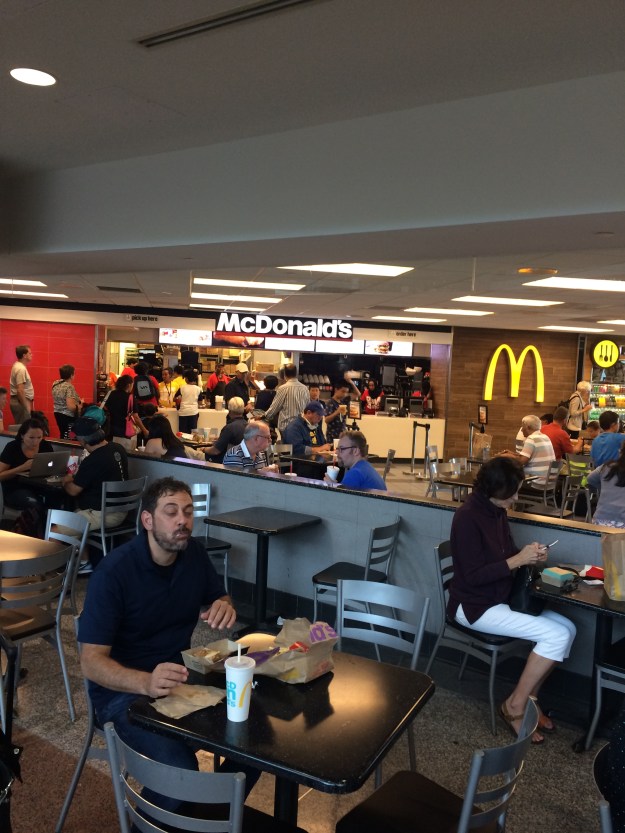
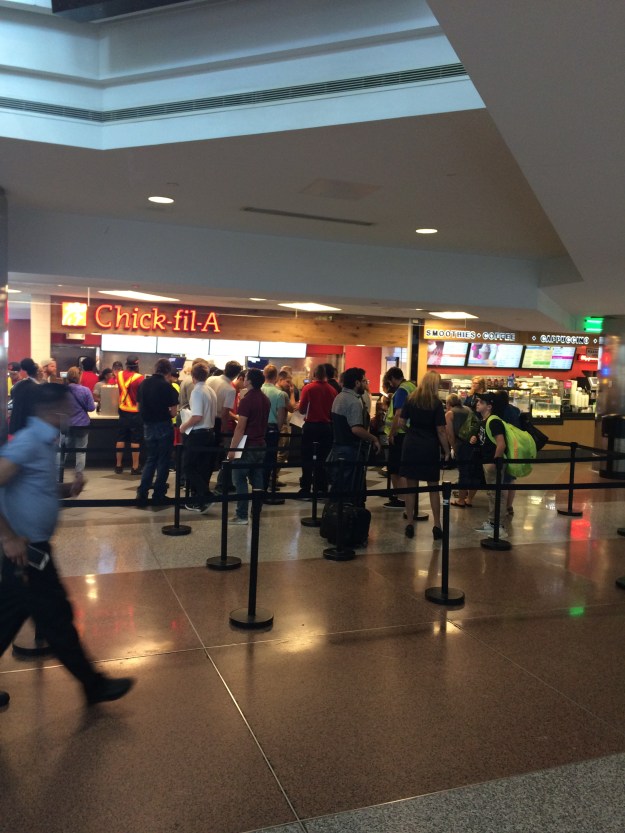
IMG_2733

IMG_2734

So I really am thankful for McDonalds. I liked the movie and I have enjoyed the food they have provided my family and me, as well as increasing the demand of beef so much for our industry. I think you would enjoy watching the movie.

Temple Worship


It was Temple Grandin’s birthday yesterday and I was sent this tribute to her by Ruth Woiwode.  I have watched the relationship between these two and Temple had told me about helping Grad students and I thought she my have helped Ruth.

Ruth is a great young lady that will continue what Temple got started as will many other people that Temple has impacted.  As Temple has proven, one person can make a big difference in quality of life for  animals and humans, but the exponential impacts in the future with all the people she has mentored and inspired will be unmeasurable.


IMG_1997

Good questions

“Thought provoking read, very interesting that even within your family opinion and emotions may differ. Could you inform us a bit more on the subject of the science of Ralgro and other such implants. Also, throughout your travels, are there any cattle yards that head and heal doctor in the pen with long lasting antibiotics in contrast to pulling to a sick pen? Always enjoy your opinion, thanks”

Lorne Hindbo asked the questions above.  I met Lorne at a ranch clinic in Red Deer Alberta a few years ago and enjoyed his philosophy and personality, and his stockmanship skills.  Thank you for two very important questions.

On the subject of roping and doctoring in the pen, yes some do it.  As some of you may know, I enjoy roping, and have worked hard at getting proficient at it.  I think it is more important to get the animal caught without overstressing the animal, and after it is roped, getting it on its side and restrained with out overstressing the animal, than throwing a fancy loop.  For my goals, the herd should also not get stirred up from the roping and doctoring.

In a pasture situation this can be accomplished in many ways, and the herd knows it can move out of the pressure so they get less stressed.

In a pen, if you create lots of pressure the animals can’t exscape the pressure so they get more stress and fear, so each time you doctor something it gets to be more stress. If weight gain is what you are after, it gets harder to settle the cattle and get them to gaining if they are fearful.

Safety becomes a factor in a feedlot pen when roping because of pen conditions. Proper veterinary practices and correct medications are also more difficult in the pen versus the hospital.

There are times and circumstances I feel that it’s a judgement call.  One example is if you have a mud hole that is impossible to get an animal out of at the gate, you would stir the sick animal and the pen up more than roping it.

This is why we need to have protocols and define our goals.  The opportunity to rope may be more important than monetary profit on some operations and then that would change the situation.  Every circumstance is different and the more skills we have, the better we will be at dealing with each circumstance.

I feel the most valuable stockman are the ones that can “get er done” but always do it with the least amount of stress possible and as safely as possible.

As for the Implant science question, I think this article explains it very well.  (My wife still won’t agree)


Industry
The facts about hormones and beef
By Oklahoma State University September 10, 2012

Questions exist in the public sector regarding the safety of consuming hormone implanted beef. In short, the use of supplemental hormones in beef production has been scientifically proven as safe for consumers and is approved by the US Food and Drug Administration (FDA). For those still in question, let’s further examine the science supporting these facts.

Hormones are products of living cells naturally found in both plants and animals that often stimulate cellular activity. There are six hormones approved for use in beef production. Three are natural hormones (testosterone, estradiol, and progesterone) and three are chemically similar synthetic hormones (melengestrol acetate, trenbolone acetate and zeranol).

Growth hormones in beef are primarily administered using a small pelleted implant that is placed under the skin on the back of the ear. The implants are designed to release the hormone slowly over time into the bloodstream. This ensures that hormone concentrations remain constant and low. Since the ear is discarded at harvest, the implant does not enter the food chain. Implants work by increasing the amount of growth regulating hormones, which are naturally produced by the animal. This, in turn, increases feed efficiency, protein deposition and growth rate. Implanted calves usually result in a 10-20% increase in average daily gain (growth rate) compared to non-implanted calves. Moreover, because of the increased feed efficiency, less feed is required which decreases production costs by 5-10%.

Since implant doses are low, the use of implants in cattle has very little impact on hormone levels in beef. Table 1 illustrates that 500 grams (~ 1 lb) of beef from an implanted steer contains approximately 7 nanograms of estrogen compared to 5 nanograms of estrogen from non-implanted beef. Furthermore, there are many common foods that are naturally much higher in estrogen than implanted beef. For example, 500 grams of tofu contains 16,214,285 times the amount of estrogen compared to the same amount of implanted beef. To gain additional perspective on the minuteness of these measurements, nanograms are equivalent to1 billionth of a gram. One gram is roughly equal in weight to 1 small paper clip. If we were to divide the same paper clip into 1 billion tiny pieces, one of those tiny pieces would equal 1 nanogram.


a Nanograms of estrogen per 500 grams of food.

Some consumers question whether consuming beef implanted with hormones can cause cancer or early puberty in children. Hormone implanted beef has never been implicated with adverse health effects in humans. However, height, weight, diet, exercise and family history have been found to influence age of puberty. Furthermore, the amount consumed in implanted beef is negligible compared to the amount the human body produces each day (Table 2).


Regarding potential environmental concerns associated with growth hormones, the FDA has determined that the use of natural hormones in beef does not pose a risk to the environment as the amounts administered to calves are much lower than amounts naturally produced by adult cattle. Regarding synthetic hormones, extensive environmental risk studies have been conducted and the FDA has determined that the use of these hormones will not significantly impact the environment.

Most of the beef produced in the US spend most of their lives in a pasture and are then finished in a feedlot where they are given a grain fed diet. Beef that are finished in a feedlot with the aid of growth hormones require less total land mass, less feed crops and create fewer greenhouse gasses per pound of beef produced compared to non growth hormone pasture based finishing systems.

Consumers that prefer to purchase naturally produced or organic beef raised without growth hormones, should be prepared to pay a premium. Implanted beef reduce the cost and resources required in beef production and that results in lower costs that are passed on to the consumer.

References:

Loy, D., 2011. Understanding hormone use in beef cattle Q&A. Iowa State University Extension. Available at: http://www.iowabeefcenter.org/information/IBC48.pdf